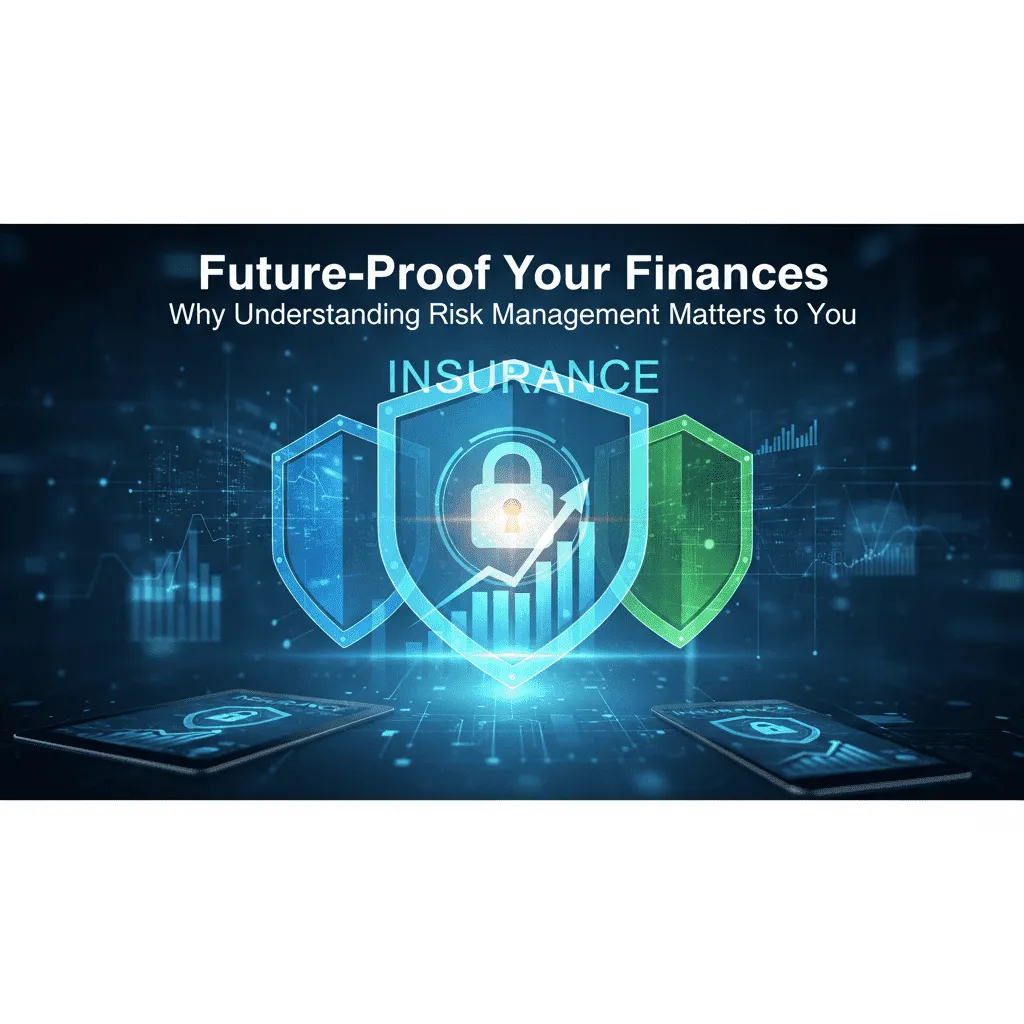
Future-Proof Your Finances: Why Understanding Risk Management Matters to You
Future-Proof Your Finances: The Ultimate Guide to Personal Risk Management (2025 Edition)
Move beyond simple saving. Learn to build an “Ironclad Portfolio” that withstands inflation, volatility, and the unexpected.
You manage risks every time you get into a car. You put on a seatbelt, check your mirrors, and perhaps even drive a vehicle with advanced collision detection. You don’t do this because you expect to crash every day; you do it because the cost of not being prepared is catastrophic.
So, here is the uncomfortable question: Why are you driving your financial life without a seatbelt?
In my years of consulting on wealth preservation, I’ve noticed a dangerous trend. Most people obsess over “returns”—which stock will double, or which high-yield savings account pays 0.5% more. But they rarely stop to calculate their exposure to ruin. In the volatile economic climate of 2024 and 2025, playing offense without defense is a strategy for disaster.
According to the Northwestern Mutual Planning & Progress Study (2024), 66% of Americans feel their financial planning needs improvement specifically due to economic uncertainty. You are not alone in feeling vulnerable.
This article isn’t about generic budgeting tips. We are going to dive deep into Personal Financial Risk Management. We will bridge the gap between institutional risk strategies and your personal bank account, helping you transition from merely “saving money” to truly “future-proofing” your life.

The New Economic Reality: Why Risk Management Matters Now
If you feel like the financial ground is shifting beneath your feet, it’s because it is. We are living through a fundamental structural shift in how financial risk is distributed.
Thirty years ago, many workers relied on defined benefit plans (pensions). If the market crashed, the employer bore the risk. Today, that risk has been transferred entirely to you through defined contribution plans like 401(k)s. If the market tanks the year you retire, your employer isn’t coming to save you.
— Larry Fink, CEO of BlackRock, 2024 Annual Chairman’s Letter
This shift is compounded by a global landscape that is increasingly unpredictable. According to the World Economic Forum Global Risks Report 2024, the number one global risk over the next two years is the cost-of-living crisis. This isn’t just about eggs costing more; it’s about the systemic erosion of wealth through sustained inflation and purchasing power parity shifts.
When you combine the burden of self-funded retirement with a high-inflation environment, traditional “set it and forget it” investing is no longer a viable strategy. You need to actively manage the threats to your capital.
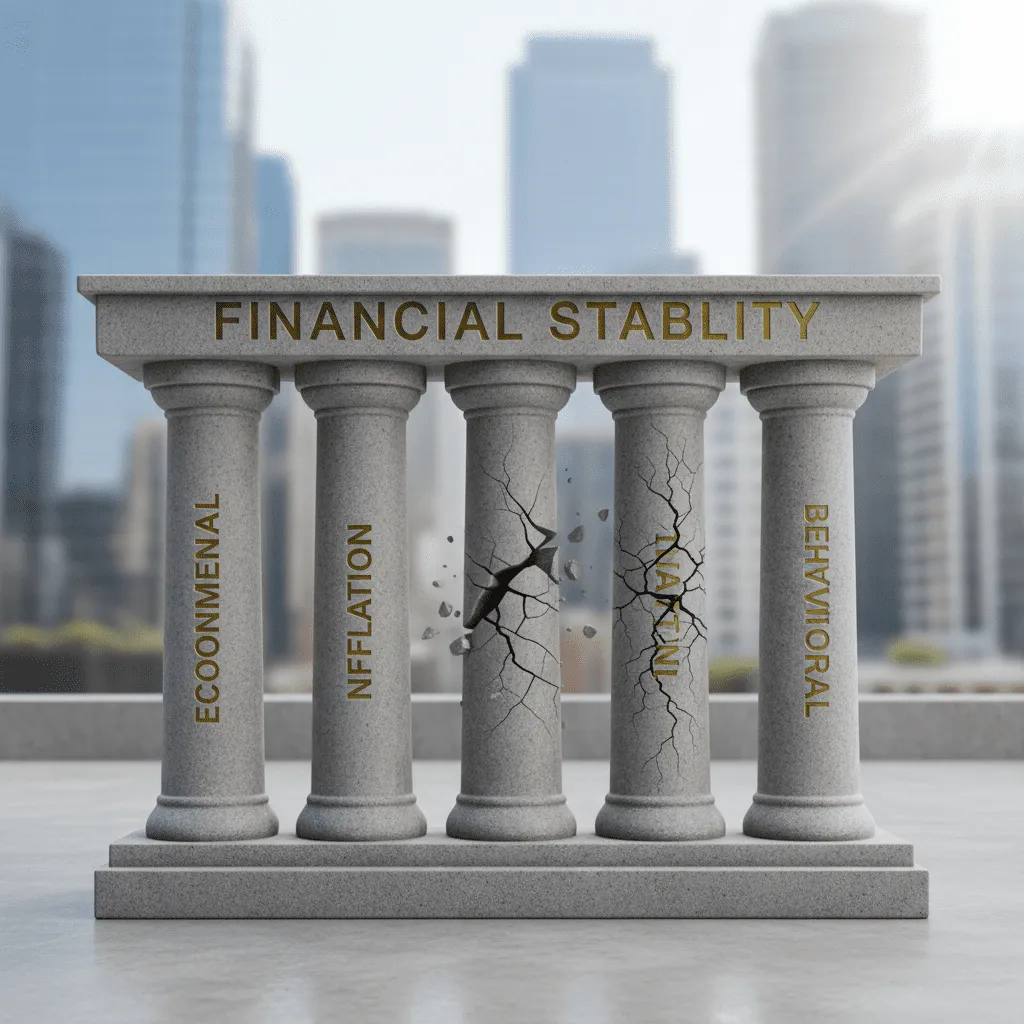
The 5 Pillars of Personal Financial Risk
To defeat the enemy, you must first name them. In personal finance, risk isn’t a monolith; it comes in five distinct flavors. Understanding which one you are most exposed to is the first step in your risk audit.
1. Market Risk & The “Sequence of Returns” Trap
Market risk is the one everyone knows: the stock market goes down, and your account balance drops. However, the real danger here is the Sequence of Returns Risk.
If you are in your 30s, a market crash is an annoyance. If you are five years from retirement, it is a catastrophe. According to the JP Morgan Guide to Retirement (2024), retiring into a bear market can deplete a portfolio 12 years faster than retiring into a bull market, even if average returns over the period are identical.
2. Inflation Risk: The Silent Wealth Killer
Inflation is not just a headline; it is a compound interest bill you pay every year. If your safe money is sitting in a checking account earning 0.01% while inflation is at 3-4%, you are guaranteeing a loss of purchasing power.
The 2024 Allianz Life Annual Retirement Study found that 65% of Americans cite inflation as the single biggest risk to their retirement plans.
3. Liquidity Risk: Asset Rich, Cash Poor
I see this constantly with clients who own real estate or small businesses. They have a high net worth on paper, but they cannot buy groceries if their income stops. Liquidity risk is the inability to access cash without selling assets at a steep loss.
If you are forced to sell your stocks during a 20% market dip because your boiler exploded, you have crystallized a paper loss into a permanent one.
4. Longevity Risk: The “Good” Problem
What happens if you don’t die? It sounds morbid, but living to 100 is a massive financial risk if you only planned to live to 85. With medical advancements, your retirement fund might need to last 35 years.
This is exacerbated by healthcare costs. A 2024 Fidelity Retiree Health Care Cost Estimate suggests the average 65-year-old couple retiring today will need roughly $315,000 in savings just to cover health care expenses. That doesn’t include long-term care or daily living expenses.
5. Behavioral Risk: The Enemy in the Mirror
This is the most volatile risk of all: You. Panic selling at the bottom, FOMO buying at the top, or lifestyle creep. As personal finance expert Dave Ramsey noted on The Ramsey Show in 2024, “You can’t out-earn your stupidity. Risk management is about behavior modification, not just math.”
Assessing Your “Risk Reality”: Capacity vs. Tolerance
One of the biggest mistakes I see is people confusing Risk Tolerance with Risk Capacity. They are not the same.
- Risk Tolerance is psychological. It’s how well you sleep at night when the market drops 2% in a day.
- Risk Capacity is mathematical. It’s how much money you can afford to lose before your financial plan actually breaks.
You might be a daredevil with high tolerance (you love crypto and individual stocks), but if you have three kids, a mortgage, and $5,000 in the bank, your capacity for risk is near zero.
Understanding this distinction requires financial literacy. Unfortunately, the TIAA Institute-GFLEC Personal Finance Index (2024) reveals that only 48% of U.S. adults can answer 50% of basic personal finance questions correctly.
Interactive Tool: Calculate Your Financial Runway
Before we discuss hedging, let’s determine your liquidity risk. Use this calculator to see how long you could survive if your income went to zero today.
Burn Rate & Runway Calculator
Strategic Hedging: The "Future-Proof" Toolkit
Once you understand your risks, you don't run from them—you hedge them. Here is how professional risk management translates to your wallet in 2025.
1. The Modern Emergency Fund (High Yield Focus)
The old rule was "three months of expenses." That advice is obsolete in the current gig economy and high-layoff environment. According to a 2024 Wonolo Gig Economy Insight Report, income volatility is higher than ever, yet 52% of gig workers have $0 in emergency savings.
The New Standard: Aim for 6 to 9 months of expenses. But don't stuff it under a mattress. With interest rates stabilizing, utilize High-Yield Savings Accounts (HYSAs) or Money Market Funds to mitigate inflation risk on your cash.
Warning: Be aware of what I call "Bank Failure Anxiety." While rare, the SVB collapse spooked many. Ensure your cash is in FDIC-insured institutions (up to $250k per depositor). If you have more, use a service like IntraFi to spread the risk.
2. Diversification 2.0: Beyond Stocks and Bonds
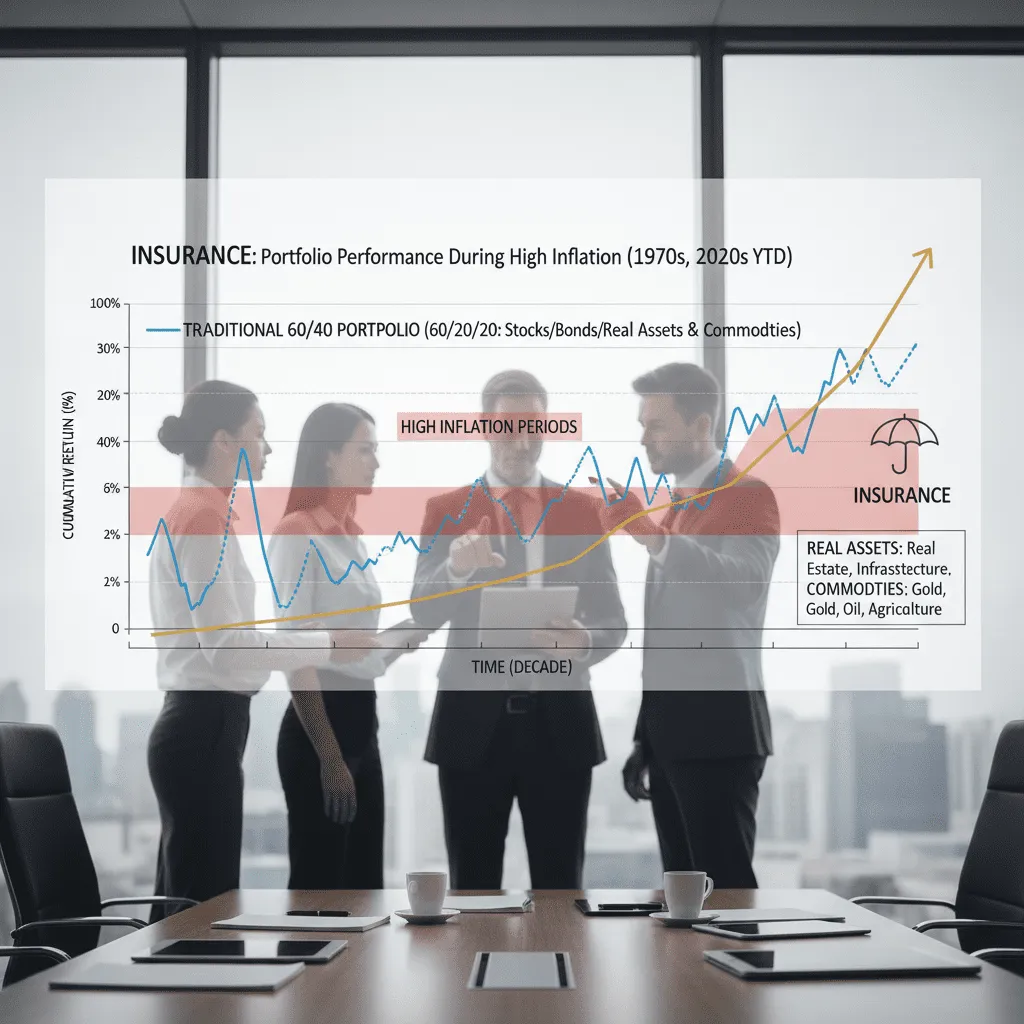
In 2022, we witnessed the failure of the traditional "60/40" portfolio (60% stocks, 40% bonds). Both asset classes fell simultaneously, leaving investors with nowhere to hide. This was the worst performance for the 60/40 model in 100 years.
To future-proof your portfolio, consider uncorrelated assets. This might include:
- Real Assets: Real estate or commodities that tend to track with inflation.
- I-Bonds: Treasury bonds specifically designed to protect purchasing power.
- Human Capital: Investing in your own skills. If you work in a volatile industry (like Tech), keep your investments conservative. If you have a stable government job, your "human capital" is bond-like, allowing your portfolio to be more aggressive.
3. The Insurance Shield: Transferring Catastrophic Risk
Insurance is the fee you pay to transfer a risk you cannot afford to a company that can. Yet, the gap is widening. The LIMRA 2024 Insurance Barometer Study shows that 42% of Americans have no life insurance coverage at all.
But beyond life insurance, consider Umbrella Insurance. In a litigious society, your auto and home policies likely cap out at $300k or $500k liability. If you are sued for $1 million due to a car accident, your retirement savings are fair game. Umbrella policies are surprisingly cheap (often $200-$300/year for $1M coverage) and act as a force field around your net worth.
Step-by-Step Personal Risk Audit
Ready to lock down your financial life? Here is your checklist for 2025.
Step 1: The Digital Fortification
Financial risk is no longer just about markets; it's about fraud. The Experian 2024 Identity Theft Forecast noted a 200% year-over-year increase in financial phishing attacks.
Action: Freeze your credit at all three bureaus (Equifax, Experian, TransUnion). Set up 2-factor authentication on every financial account using an authenticator app, not SMS.
Step 2: The Estate Checkup
If you don't have a will or a trust, the state has one for you—and you won't like it.
Action: Verify your beneficiaries on all 401(k)s and IRAs. These beneficiary designations override your will. If your ex-spouse is still listed, they get the money, regardless of what your new will says.
Step 3: The Equity Buffer
According to the CoreLogic Home Equity Report Q1 2024, U.S. homeowners are sitting on nearly $30 trillion in home equity.
Action: Consider opening a Home Equity Line of Credit (HELOC) but do not draw on it. Having a $50,000 line of credit available acts as a secondary emergency fund for liquidity crises, preventing you from selling stocks in a downturn.
Frequently Asked Questions (FAQ)
How do I calculate my personal risk tolerance accurately?
Avoid generic online quizzes. Instead, use the "Sleep Test" combined with a drawdown simulation. Ask yourself: "If my portfolio dropped 30% ($X amount) tomorrow, would I buy more, hold, or sell?" If the answer is sell, your allocation is too aggressive. However, balance this with your capacity—the mathematical reality of what you need your money to do to beat inflation.
Is cash a safe hedge during high inflation in 2025?
Cash is safe from market volatility, but it is vulnerable to purchasing power risk. While holding cash is essential for liquidity (emergencies), holding too much guarantees a loss in real terms. According to data from the Bureau of Labor Statistics, cash loses value every year inflation is positive. Use short-term T-Bills or High-Yield Savings Accounts to mitigate this erosion while maintaining liquidity.
Do I really need umbrella insurance if I'm not wealthy?
Yes. In fact, you might need it more. "Wealthy" is relative, but if you own a home and have a retirement account, you have assets to lose. Additionally, future wage garnishment is a risk in major lawsuits. Given that umbrella insurance is one of the cheapest insurance products available, it is a high-value layer of protection for the middle class.
How does "Sequence of Returns Risk" affect me in my 40s?
It affects you less than a retiree, but it still matters. If you experience a "lost decade" of market returns in your 40s (your peak earning years), you may need to save significantly more to catch up. The mitigation strategy here is aggressive savings rates. As Transamerica Center for Retirement Studies data suggests, saving consistent amounts allows you to buy more shares when prices are low (Dollar Cost Averaging), turning volatility into an asset.
Conclusion: Risk is the Price of Admission
It is easy to look at the data—the inflation, the debt levels, the market volatility—and want to bury your head in the sand. But avoidance is not a strategy. As Warren Buffett famously said, "Risk comes from not knowing what you're doing."
By reading this, you are no longer unknowing. You understand that risk isn't inherently "bad." Risk is simply the price of admission for the returns required to build long-term wealth. The goal of future-proofing your finances isn't to eliminate risk entirely—that would mean earning zero returns. The goal is to eliminate uncompensated risk (like lack of diversification) and catastrophic risk (like lack of insurance).
Your next move? Don't try to fix everything at once. Start with the "Burn Rate Calculator" above. Once your liquidity is secure, move to the insurance audit. Build your fortress one brick at a time.
The economy of 2025 will be volatile, but for the prepared, volatility is just noise. Buckle up, check your mirrors, and drive with confidence.