Matching Insurance Coverage to Your Lifestyle & Budget
Finding Your Fit: The 2025 Guide to Matching Insurance Coverage to Your Lifestyle & Budget
Don’t let the “Coverage Gap” derail your financial future. Here is how to audit, choose, and optimize your protection in a high-inflation economy.
In 2024, I spoke with a client who thought he was “all set” because he had renewed his auto policy on autopay for five years straight. Then he got into a minor accident. To his horror, he discovered his liability limits were stuck in 2019, while repair costs had skyrocketed. He ended up paying $12,000 out of pocket. He isn’t alone.
The insurance landscape has shifted violently under our feet. According to J.D. Power’s 2024 U.S. Insurance Shopping Study, the average cost of auto insurance surged 22.2% year-over-year. That is a massive hit to the wallet. But here is the scarier part: in an attempt to save money, millions of people are unintentionally drifting into dangerous territory.
If you are still using the “set it and forget it” strategy, you are currently a financial risk. This guide isn’t just about buying a policy; it’s about how to choose insurance coverage that actually fits your life right now—not the life you lived three years ago.
- Why 2/3 of homeowners are currently underinsured.
- The Lifestyle Fit Framework: Specific strategies for Gen Z, Families, and Retirees.
- The Math: A calculator to see how much of your budget should go to protection.
- How to spot the “Actual Cash Value” trap before it costs you thousands.

The “Coverage Gap” Crisis: Why You Need an Audit Now
Most people I talk to worry about paying too much for insurance. But in 2025, the bigger threat is paying for insurance that won’t actually cover you when disaster strikes. We call this the “Coverage Gap.”
Inflation hasn’t just made eggs and gas more expensive; it has drastically increased the cost to rebuild a home or repair a car. If your policy limits haven’t risen alongside inflation, you are effectively self-insuring the difference.
The data on this is alarming. According to a 2024 report from Matic, two-thirds of U.S. homes are underinsured because coverage amounts failed to keep pace with rising premiums and replacement costs. Imagine losing your home to a fire, only to find out your insurance check is $100,000 short of what builders now charge to reconstruct it.
Even worse, some are dropping coverage entirely. A March 2024 report by the Consumer Federation of America revealed that 7.4% of homeowners—about 6.1 million people—are “going bare” (uninsured), risking $1.6 trillion in unprotected market value. As the CFA authors stated, “Being uninsured poses a potential threat not only to individual homeowners but also to communities and our national housing stock.”
This is not the time to cut corners blindly. It is time to cut smartly.
The Lifestyle Fit Framework (Select Your Profile)
One size does not fit all. Advice that works for a 55-year-old empty nester is terrible advice for a 24-year-old gig worker. In my experience, the biggest mistakes happen when people buy “generic” coverage. Let’s look at how to customize your portfolio based on your life stage.
1. The Young Professional / Gig Worker
If you are in your 20s or early 30s, you might think you don’t need much. You are likely renting and maybe driving an older car. But this demographic is actually the most active in the market. According to J.D. Power, Gen Z has the highest switch rate for auto insurance as they hunt for deals.
The Strategy:
- Renters Insurance is Mandatory: It’s cheap (often $15/month), but essential. Ensure you have “replacement cost” coverage for your tech. If your $2,000 laptop is stolen, you want $2,000 to buy a new one, not the $400 it was worth on eBay.
- Disability Income Protection: If you are a freelancer or gig worker, you don’t have paid sick leave. If you break your leg and can’t drive or type, your income stops. Short-term disability insurance is often more valuable to this group than life insurance.
- Telematics: Since younger drivers often face higher premiums, enrolling in Usage-Based Insurance (UBI) programs can lower rates significantly if you are a safe driver.
2. The Growing Family (Home + Kids)
This is the “high exposure” phase. You have a mortgage, dependents, and probably two cars. The financial pressure is real—KFF’s 2024 Employer Health Benefits Survey shows that annual premiums for employer-sponsored family health coverage rose 7% to reach a staggering $25,572.
The Strategy:
- Life Insurance is Non-Negotiable: You need to replace income. Despite this, a 2024 LIMRA study found that 102 million Americans say they need more life coverage. Specifically, only 46% of women reported owning life insurance compared to 57% of men. This gender gap puts families at risk if the mother is a primary or co-breadwinner.
- Umbrella Policy: If you own a home and have savings, one lawsuit from a car accident could wipe you out. An umbrella policy adds $1 million+ in liability coverage for a few hundred dollars a year.
- High-Deductible Health Plans (HDHP): If your family is generally healthy, switching to an HDHP with a Health Savings Account (HSA) can offset those rising premiums.

3. The Empty Nester / Pre-Retiree
As you approach retirement, your assets are at their peak, but your risk tolerance is lower. Interestingly, TransUnion reported in February 2025 that Boomers are shopping for auto insurance at record rates, proving that even established households are feeling the price pinch.
The Strategy:
- Downsizing Coverage: If your mortgage is paid off, you don’t need life insurance to cover debt. However, you might need it for estate planning or leaving a legacy.
- Long-Term Care (LTC): Medicare does not cover extended nursing home stays. Planning for this now is critical to protect your nest egg.
- Audit Your Auto: If you are retired and driving less, call your insurer. Low-mileage discounts are real, but you have to ask for them.
Budgeting for Protection: The Financial Formulas
The most common question I get is, “How much of my money should go to insurance?” If you spend too much, you’re “insurance poor.” Spend too little, and you’re exposed.
The 50/30/20 Rule Application
You may know the 50/30/20 rule: 50% of income to Needs, 30% to Wants, 20% to Savings. Insurance premiums fall squarely into the “Needs” category.
However, with rising costs, this bucket is overflowing. KFF data notes that 32% of covered workers in 2024 face a deductible of $2,000 or more. This means you not only need to budget for premiums but also keep a “deductible fund” in your savings.
Monthly Insurance Budget Calculator
Use this tool to estimate how your insurance costs fit into the “50% Needs” bucket based on the 50/30/20 rule.
Your “Needs” Budget (50%): $
Insurance Impact: Your premiums consume % of your income.
The Telematics Trade-off
If the calculator showed you’re in the red, you need to lower costs without lowering coverage. The most effective way in 2025 is Telematics (Usage-Based Insurance). Patrick Foy, Senior Director at TransUnion, noted in early 2025 that insurers are using data segmentation more aggressively to find “high quality prospects.”
If you let them track your driving, and you drive safely, you can save 10-30%. It is a privacy trade-off, but for many, the savings are necessary.
Red Flags in Your Policy: What Agents Don’t Always Say
When you are staring at a 30-page policy document, your eyes glaze over. I get it. But there are two specific terms you need to hunt for.
1. “Actual Cash Value” (ACV) vs. “Replacement Cost”
This is the number one trap.
Replacement Cost: Pays to buy a new TV to replace the one stolen.
Actual Cash Value: Pays what your 5-year-old TV was worth used on Craigslist (maybe $50).
Many homeowners policies default to ACV for personal property to show a lower premium. Change this immediately. The price difference is negligible, but the claim difference is massive.
2. The Missing “Inflation Guard”
With Matic reporting a 17.4% premium increase due to inflation, you need an “Inflation Guard” endorsement. This automatically increases your dwelling coverage limit by a set percentage every year to keep up with construction costs. Without it, your policy value stays flat while the cost of lumber and labor skyrockets.

Step-by-Step: How to Shop Smart in 2025
Ready to fix your coverage? Don’t just Google “cheap insurance.” That is how you end up with a company that ghosts you when you file a claim. Here is the professional way to shop.
Step 1: Gather the “Declarations Page”
You cannot compare quotes if you don’t know what you currently have. Find your “Declarations Page” (usually the first page of your policy). It lists your limits (e.g., 100/300/100) and deductibles. You need to match these apples-to-apples when getting new quotes.
Step 2: Check the “Trust Factor”
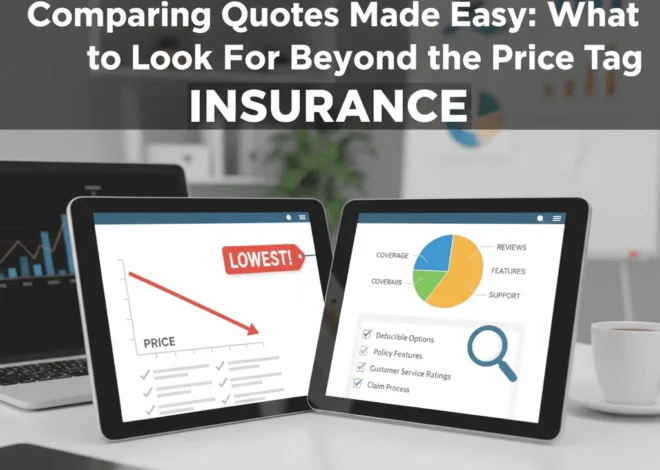
Price isn’t everything. In fact, J.D. Power’s 2024 Auto Claims Satisfaction Study showed that overall satisfaction dropped nearly 200 points to 646 (on a 1,000-point scale). When claim processes are slow, cheap premiums feel very expensive.
Breanne Armstrong from J.D. Power puts it perfectly: “Even though high premiums negatively affect customer satisfaction, those negative influences can be offset by high levels of trust that insurers will come through when they are needed.”
Before buying, check the carrier’s complaint ratio on the NAIC (National Association of Insurance Commissioners) website. If a company has a high volume of complaints, run.
Step 3: Bundle… But Verify
Bundling home and auto is the classic advice. However, in 2025, specialized insurers are disrupting this. Sometimes, buying auto insurance from a specialist and home insurance from a different specialist is cheaper than a bundle from a generalist carrier. Always quote both ways.
FAQ: Common Insurance Coverage Questions
How do I know if I have enough liability coverage?
A good rule of thumb is that your liability limits should equal your total net worth. If you have a house worth $500,000 and savings of $100,000, carrying state-minimum liability (often $25,000) is financial suicide. You are a target for lawsuits. Aim for at least 100/300/100 coverage.
Is Gap Insurance worth it for used cars?
With used car prices fluctuating, Gap Insurance is vital if you owe more on the loan than the car is worth. If you put less than 20% down, you likely need Gap Insurance.
Why did my insurance premium go up even though I had no claims?
As mentioned earlier, J.D. Power reports a 22.2% surge in costs. This is due to “social inflation” (higher lawsuit costs), increased vehicle repair complexity (sensors and cameras), and extreme weather events affecting risk pools globally. It’s not just you; it’s the economy.
What is the biggest waste of money in insurance?
Low deductibles. Paying a high premium to have a $250 deductible is rarely mathematically sound. Raising your deductible to $1,000 can save you up to 20% on premiums. Bank those savings; don’t give them to the insurer.
Conclusion: Your Annual Review Checklist
The days of loyalty discounts are largely gone. In this volatile market, loyalty is often penalized with “price creep.” Stephen Crewdson from J.D. Power noted, “Customers are no longer passively keeping an eye out for a better deal. Instead, they are actively seeking new carriers to offset these rising costs.”
You should join them. Here is your immediate action plan:
- Pull your Declarations Pages for all policies.
- Use the calculator above to see if you are over-spending or under-protecting.
- Verify your Home Value: Ensure your dwelling coverage matches current local construction costs, not what you paid for the house 10 years ago.
- Shop the Market: Get at least three quotes, but check NAIC complaint scores before switching.
Insurance isn’t exciting, but protecting your financial future is. Don’t let inflation erode your safety net. Take control of your coverage today.