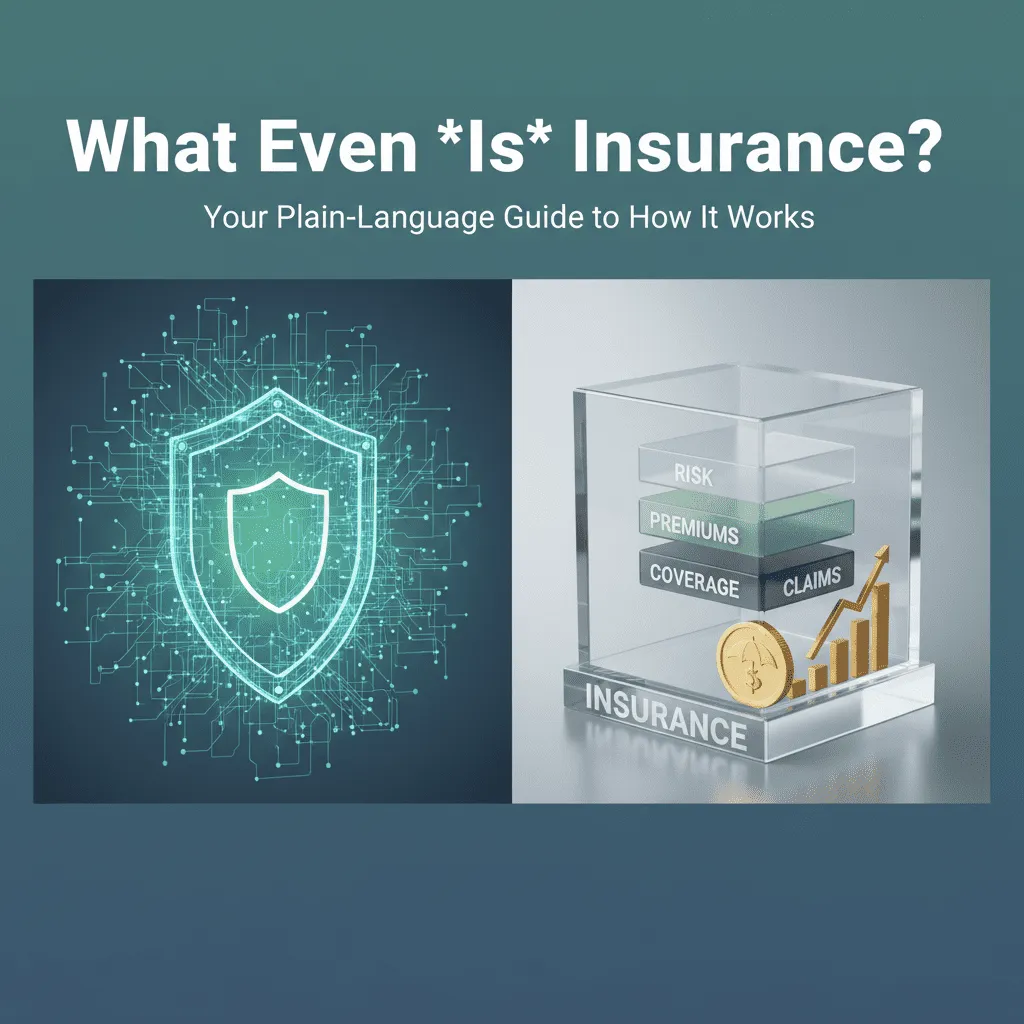
What Even *Is* Insurance? Your Plain-Language Guide to How It Works
What Even Is Insurance? Your Plain-Language Guide to How It Works
The “Plain English” Promise: No jargon. No confusion. Just the raw truth about what you’re paying for, why it costs so much, and whether it’s actually worth it.
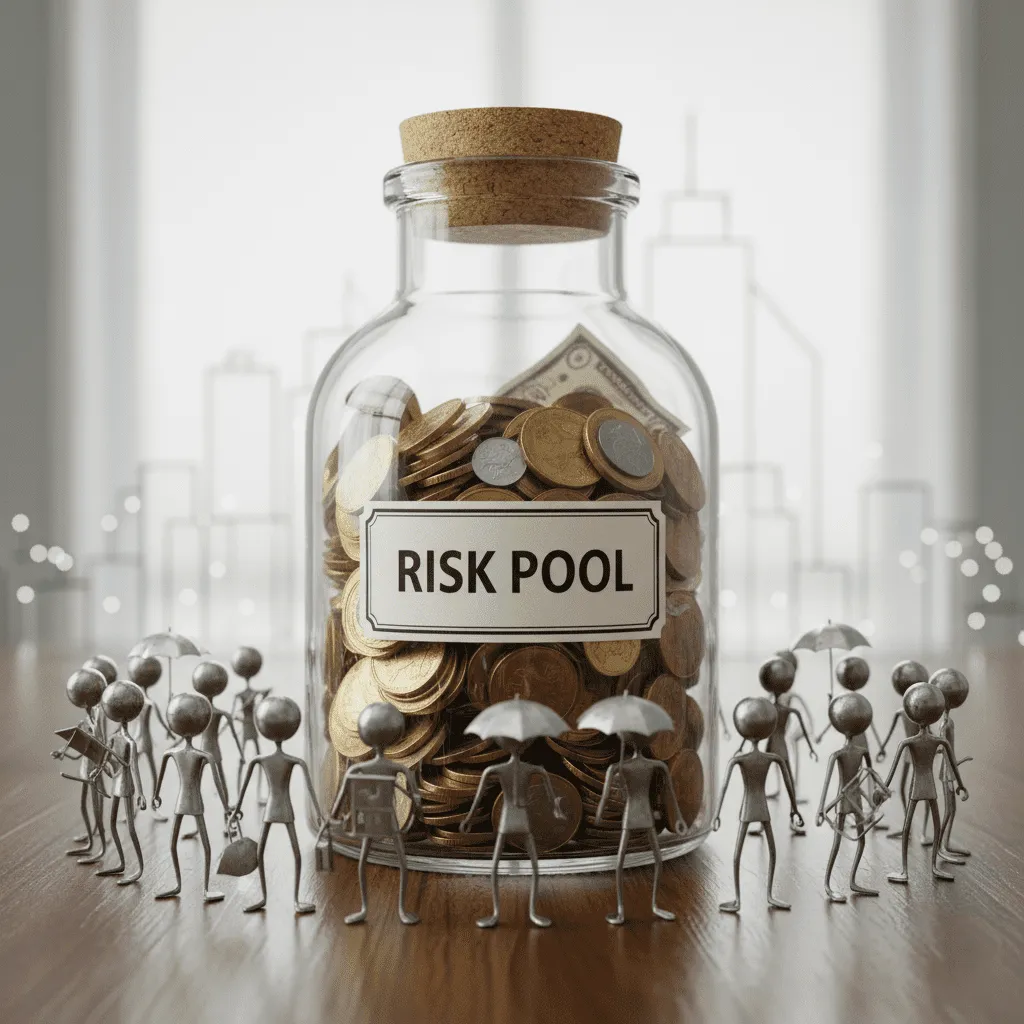
Imagine you and 99 friends put $10 into a jar every month. If one friend drops their phone, the jar pays for it. If no one drops a phone, the jar grows. If five people drop their phones at once, the jar empties, and next month everyone has to put in $12.
That jar? That’s insurance.
I know, nobody wakes up on a Saturday morning excited to read about risk transfer mechanisms. In fact, most of us actively avoid it. According to the Thales Digital Trust Index 2024, only 24% of consumers trust the insurance industry with their personal data—ranking it lower than banking and healthcare.
You might be skeptical. You might feel like you’re throwing money into a void. I’ve spent years analyzing financial products, and I’ve seen the confusion firsthand. But here is the reality: Insurance is the difference between a bad day and a bankrupt life. Let’s strip away the corporate speak and figure out how this machine actually works.
The “Position Zero” Definition
If you take nothing else away from this guide, remember this definition.
Insurance is a contract (policy) where you transfer the financial risk of a specific loss to a company in exchange for payment (premium).
In English: You pay a little bit now so you don’t have to pay a massive amount later if disaster strikes.
How Insurance Actually Works (The Mechanics)
It feels like gambling, doesn’t it? You bet you will crash your car; the insurance company bets you won’t. But unlike a casino, the goal here isn’t to win the jackpot—it’s to not lose your shirt.
1. The Concept of Risk Pooling
Insurance relies on the “Community Pot” analogy I mentioned earlier. Insurers group thousands of people together who face similar risks (like driving a car or owning a home). This is called a risk pool.
The math relies on the Law of Large Numbers. An insurer can’t predict if you specifically will get into an accident. But they can predict with startling accuracy that out of 100,000 drivers, exactly 6,420 will have an accident this year. They collect money from everyone to pay for the unlucky few.
2. Premiums vs. Payouts (The Float)
So, how do they make money? It’s not just by denying claims (a common myth). Insurers make money through two avenues:
- Underwriting Profit: Collecting more in premiums than they pay out in claims.
- The Float: They invest your monthly premiums before they have to pay them out.
2025 Market Reality: It’s getting harder for insurers to make that profit. According to the NAIC Annual Health Industry Report (2025), net income for the US health insurance industry dropped from $25 billion in 2023 to just $9 billion in 2024 due to rising medical costs. The “house” doesn’t always win as easily as you think.
The “Big Three” Terms You Must Know
Policy documents are written in a language that seems designed to put you to sleep. Let’s translate the three most critical terms into plain English.
1. Premium (The Subscription)
This is your monthly or annual bill. It’s the cost of entry. If you stop paying this, your coverage vanishes.
Why did my rate go up? If you feel like you’re paying more, you aren’t crazy. According to the Swiss Re Sigma Report (Nov 2024), global non-life insurance premiums grew by 4.3% in 2024—the highest rate in a decade. This is largely due to inflation and climate disasters.
2. Deductible (Your “Skin in the Game”)
This is the amount you must pay before the insurance company pays a dime.
The Pizza Party Analogy:
Imagine you have car insurance with a $500 deductible. You get into a fender bender that costs $2,000 to fix.
You pay the first $500 (buying the appetizers).
The insurer pays the remaining $1,500 (buying the rest of the pizza).
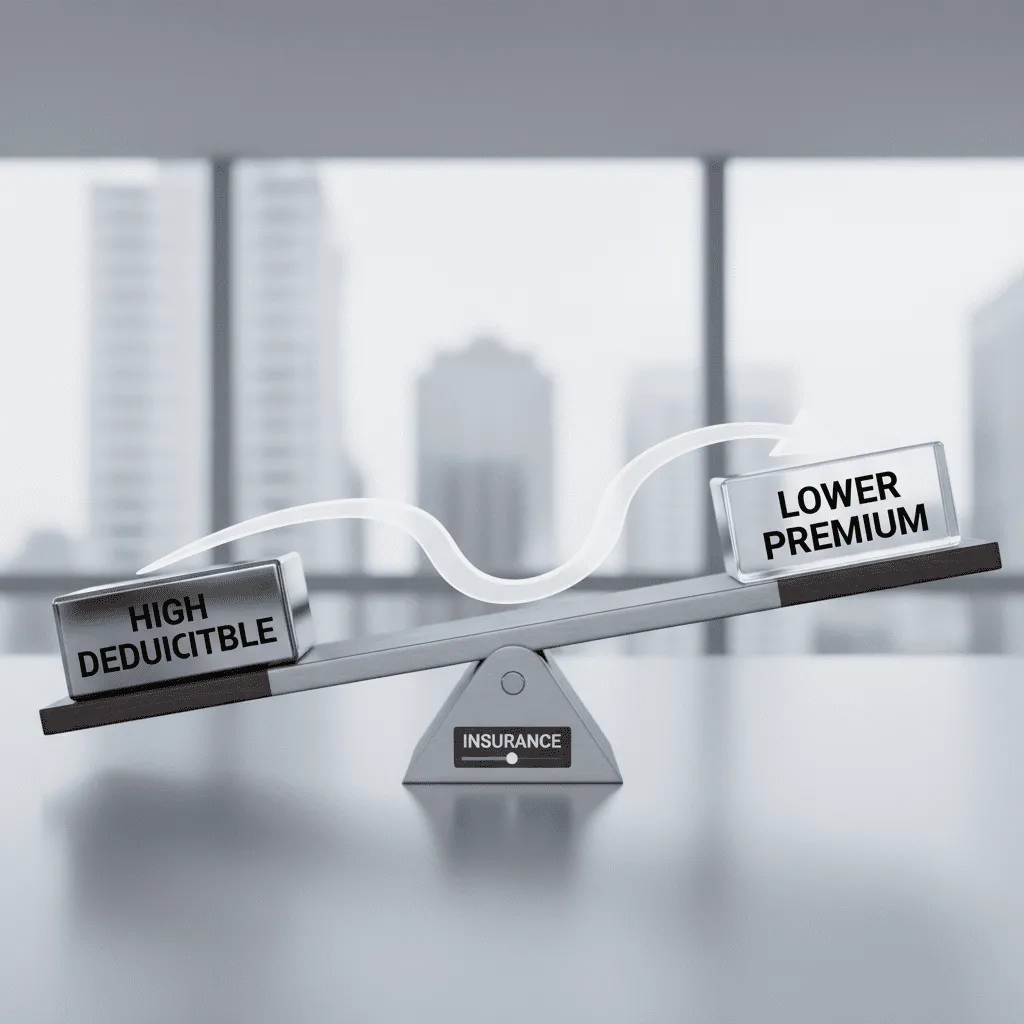
Crucial Rule: There is a see-saw relationship here. Higher Deductible = Lower Premium. If you agree to pay more upfront during a crash, your monthly bill goes down.
3. Limit (The Ceiling)
This is the maximum amount the insurer will pay. If your policy limit is $50,000 and you cause $100,000 worth of damage, you are personally on the hook for the other $50,000. Never ignore the limit.
Why Do We Need It? (The Financial Safety Net)
Beyond the fact that the government often forces you to have it (like auto liability), insurance serves a critical economic function. It prevents a single bad event from ruining your financial future.
The “Catastrophe Gap”
Here is the scariest statistic I found in my research. Most people think the world is well-insured. It isn’t.
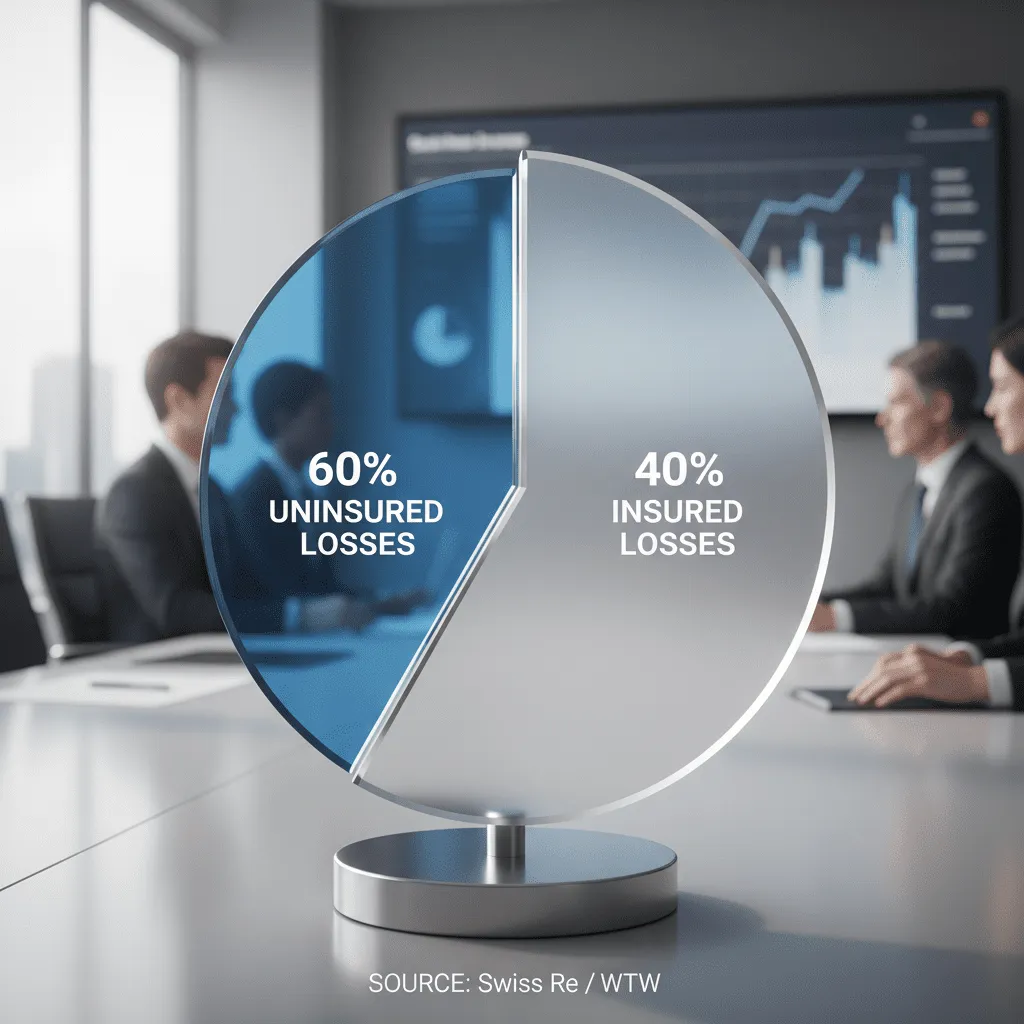
According to a report by WTW (Willis Towers Watson) published in Jan 2025, only 40% of global economic losses from natural catastrophes in 2024 were insured. That leaves a “protection gap” of 60%.
What does that mean? It means when disaster strikes, 60% of the financial loss comes directly out of people’s savings, or worse, they simply lose everything. As noted by the Swiss Re Institute (April 2025), “A big protection gap lowers the financial ability of economies to bounce back from disasters.”
Types of Insurance Explained Simply
While there are niche policies for everything (even alien abduction insurance exists), most fall into three buckets.
1. Property & Casualty (P&C)
This protects things. Your car, your house, your apartment.
However, there is a massive gap here for younger adults. Data from the NAIC (May 2025 Analysis) shows that fewer than 21% of Gen Z adults currently carry renters insurance. If your apartment burns down, the landlord’s insurance covers the building, not your laptop or clothes. Without your own policy, you start from zero.
2. Life & Health (L&H)
This protects people. Health insurance pays doctors; life insurance pays your family if you die.
There is a shift happening here. A 2024 study by the LIMRA / Life Happens Barometer found that 44% of Gen Z consumers intend to purchase life insurance within the next year—the highest intent of any generation. They are realizing early that their “human capital” is their biggest asset.
3. Liability
This protects you from lawsuits. If your dog bites the mailman or you accidentally trip someone on the sidewalk, liability coverage pays for their legal fees and medical bills so you don’t get sued into bankruptcy.
The Future: Is Insurance Changing? (2025 Trends)
The industry is old, but it isn’t standing still. If you hate calling agents and filling out paper forms, you’re in luck.
Embedded Insurance
The days of calling an agent after you buy a car are ending. We are moving toward “Embedded Insurance”—where you tick a box to buy coverage at the exact moment you buy the product.
According to the Polly Embedded Auto Insurance Study (Jan 2024), 81% of Millennial and Gen Z buyers want to purchase auto insurance digitally at the same moment they buy their car. The industry is listening. The Deloitte 2025 Global Insurance Outlook projects the embedded market will top $722 billion globally by 2030.
Usage-Based Insurance (Telematics)
Why pay the same rate as a bad driver if you drive safely? Usage-based insurance (UBI) uses an app to track your braking and speed. Drive safe, pay less. It’s that simple.
Consumer Behavior Shift: High prices are forcing people to shop around. The TransUnion Insurance Report (Q3 2024) noted that auto insurance shopping increased 19% year-over-year as consumers desperately sought relief from high rates.
FAQ: Questions You Were Too Afraid to Ask
Is insurance a scam if I never claim?
I hear this constantly. “I paid premiums for 10 years and got nothing back!” Ideally, you want to get nothing back. If you get a payout, it means something terrible happened (a crash, a fire, a death). Think of insurance as buying “access to money” in case of an emergency, not an investment product.
Why is it so expensive right now?
It’s not just corporate greed; it’s the weather. Data from Aon shows that global insured losses from natural catastrophes exceeded $100 billion for the fifth consecutive year in 2024. When storms get worse, claims go up, and premiums follow.
What happens if I don’t use my insurance?
With standard policies, the money is gone. It was the fee for the protection period. However, some policies (like “Return of Premium” life insurance) offer money back, but they cost significantly more upfront.
Conclusion
Insurance isn’t a bill; it’s a backup plan. It is the only financial product that can produce $50,000 of capital instantly when you need it most.
If you are part of the Gen Z cohort feeling skeptical about the industry, I get it. The jargon is thick and the trust is low. But look at the data: with rising climate risks and economic volatility, the “protection gap” is a dangerous place to be.
Don’t just buy the cheapest policy you find online. Look at the deductible. Check the limit. Understand the risk you are keeping and the risk you are transferring. In a world that is increasingly unpredictable, that boring policy document might just be the most exciting thing you own on the worst day of your life.