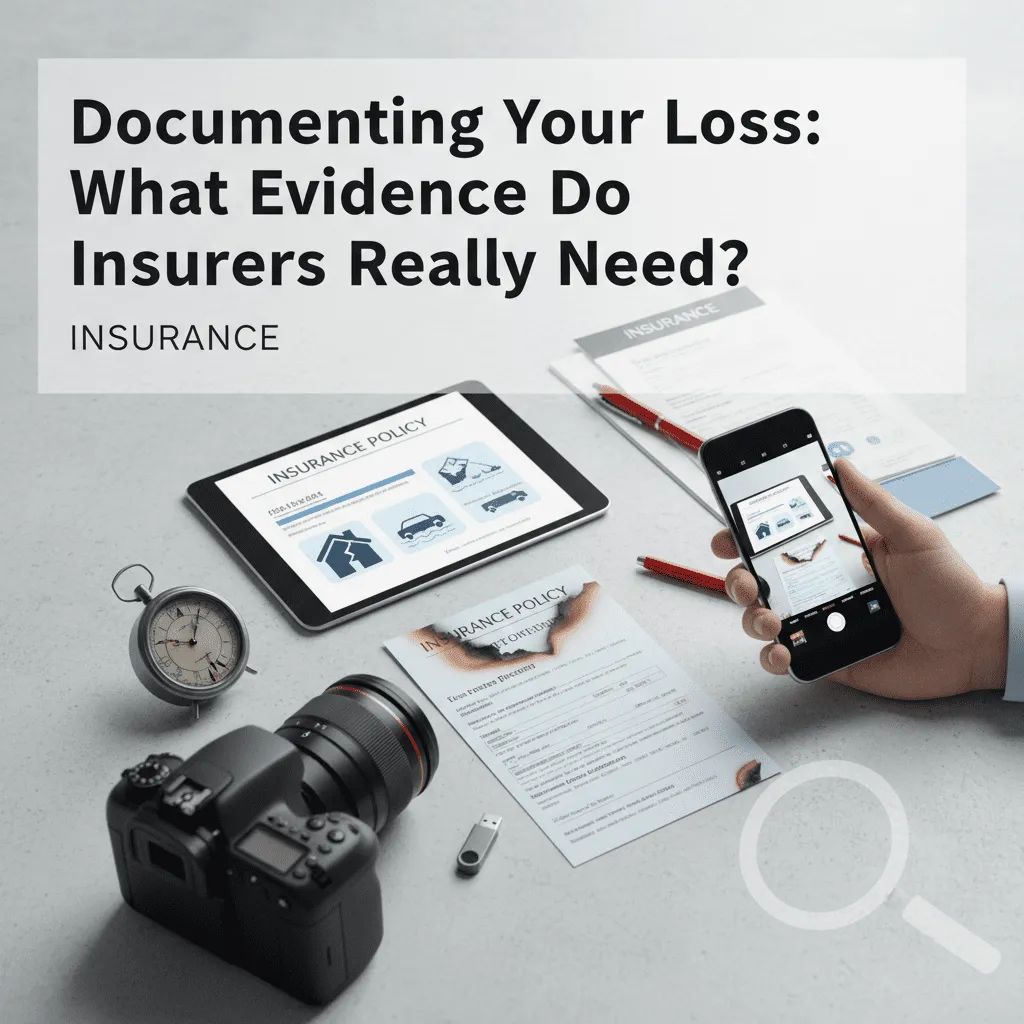
What Evidence Do Insurers Really Need?
Documenting Your Loss: The Exact Evidence Insurers Need in 2025 (Guide)
If you feel like your insurance claim is dragging on, you aren’t imagining it. In 2024, the average property claim took 23.9 days to settle—nearly a full week longer than it did just two years prior. When catastrophic events hit, that timeline stretches even further.
I’ve worked with hundreds of policyholders, and here is the hard truth I wish someone had told them on Day 1: The difference between a fast, full payout and a six-month battle often comes down to one boring, tedious variable—the quality of your proof of loss documentation.
Stop guessing what the adjuster wants. In this guide, we aren’t just giving you “tips.” We are breaking down the legal requirements for a “Sworn Statement in Proof of Loss,” the digital metadata standards adjusters use to verify dates, and how to reconstruct evidence for items that have been burned, stolen, or washed away.
The “Proof of Loss” Is Not Just a Form—It’s a Legal Trigger
There is a massive misconception that simply calling your insurance agent constitutes “proving” your loss. It doesn’t. That phone call is technically your Notice of Loss. It opens the file.
The Proof of Loss is entirely different. It is a formal legal document (usually a sworn affidavit) where you state the details of what was damaged, the cause, and the amount you are claiming.
Notice of Loss vs. Sworn Proof of Loss
Understanding the distinction is critical because the clock ticks differently for each.
- Notice of Loss: This is your initial report. Most policies require this “promptly.”
- Sworn Proof of Loss: This is a specific document the insurance company may formally request. Once they request it, you typically have 60 days to submit it. If you miss this deadline, your entire claim can be legally denied, regardless of how much damage you have.
The FEMA & NFIP 60-Day Deadline (Critical for Flood)
If you are dealing with a flood claim through the National Flood Insurance Program (NFIP), the rules are rigid. Unlike standard homeowner policies where deadlines can sometimes be extended, federal flood policies are governed by federal statute.
You must use FEMA Form 206-FY-21-108. According to the FEMA 2024 NFIP Claims Handbook Update, strict adherence to the Proof of Loss deadline is required. While deadlines for major catastrophes like Hurricanes Helene and Milton were extended to 180 days, you should never assume an extension exists without written confirmation.
In my experience helping clients download FEMA Form 206-FY-21-108, many hit a wall. The PDF often fails to load in Chrome or Edge due to Adobe plugin conflicts. Use Mozilla Firefox or download the file directly to your desktop to open it with Adobe Acrobat Reader. Do not let a browser glitch cause you to miss a federal deadline.
What “Sworn to” Really Means
When you sign a proof of loss, you are signing under penalty of perjury. This is an aleatory contract requirement.
Insurers are on high alert for fraud. According to the National Insurance Crime Bureau (NICB) 2024 Fraud Report, synthetic identity fraud and inflated claims contribute to billions in losses annually. If you claim an item is worth $5,000 when you know it costs $500, that isn’t negotiation; it’s a crime that can void your entire policy—even the legitimate parts.
The 4 Tiers of Acceptable Evidence (Ranked by Authority)
Adjusters operate on a hierarchy of trust. When documenting your insurance claim evidence requirements, think of it like a court case. The stronger your evidence tier, the faster the check gets cut.
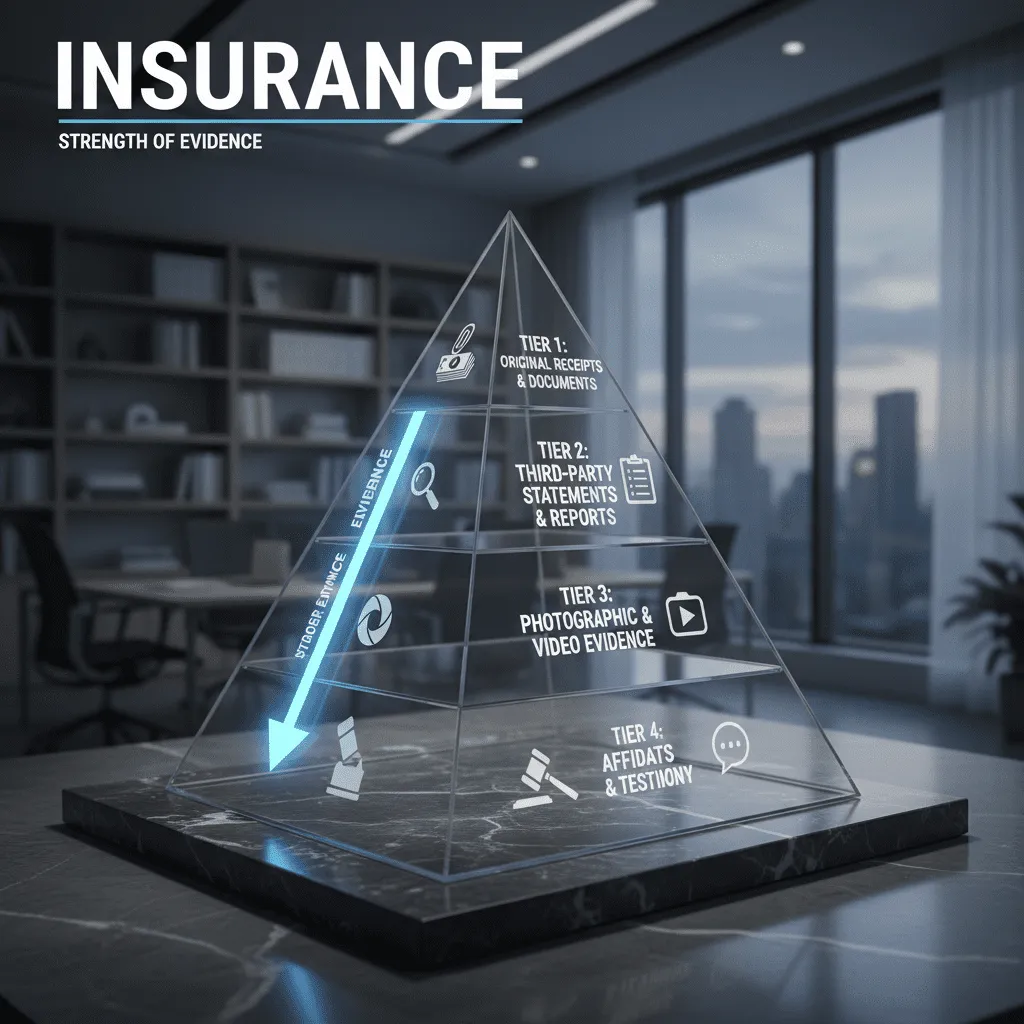
Tier 1: Original Purchase Records (The Gold Standard)
This includes physical receipts, email confirmations, credit card closing statements, and warranty cards. If you have these, there is very little an adjuster can dispute regarding ownership or cost.
Tier 2: Digital Forensics
In 2025, paper is rare. Insurers accept digital footprints. This includes:
- Amazon/Costco Order History: You can export yearly reports.
- Bank/Credit Card Statements: Even if the line item just says “Target – $400,” it proves you spent the money on that date.
- EXIF Data: Photos on your phone verify the date and location of an item’s existence.
Tier 3: Visual Reconstruction
This is where you play detective. If you don’t have a receipt for that expensive leather sofa, do you have a picture of your family sitting on it last Christmas? That photo is proof of ownership. I often tell clients to scroll through their social media feeds—background details in birthday photos are gold mines for establishing the quality and existence of lost items.
Tier 4: Sworn Affidavits
When all else is lost—perhaps your receipts burned up with the house—you may submit a sworn affidavit. This is a notarized statement saying, “I owned a Sony 65-inch TV purchased in 2023.” While acceptable, this is the weakest form of evidence and is most likely to trigger a Scope of loss dispute or depreciation negotiation.
Digital Documentation: The 2025 Standard
Taking a photo isn’t enough anymore. In the era of AI and Photoshop, insurers are skeptical of digital images. To establish trust, you need to understand metadata.
Why Metadata Matters
Every digital photo contains Exchangeable Image File Format (EXIF) data. This hidden data proves when and where a photo was taken.
Mark Garrett, Director of Claims Intelligence at J.D. Power, notes that satisfaction drops significantly when claims drag on. He states, “It’s when claims last beyond three weeks that we see things decline.” (Source: J.D. Power 2024 Study).
To keep your claim under that 3-week mark, do not strip the metadata. If you take a photo of water damage on Tuesday, the metadata proves it happened Tuesday. If you screenshot that photo and send the screenshot, the metadata changes to today. This allows the insurer to argue the damage might be pre-existing or that you delayed reporting it.
When photographing damage, avoid close-ups initially. Stand back and capture all four corners of the room (or wall) first. Then, move in for the mid-range shot. Finally, take the close-up of the specific damage. This context prevents the adjuster from claiming they “can’t tell where this is located.”
Video Walk-Throughs: Narrate the Damage
According to an October 2025 report by Claims Journal, nearly 80% of homeowners are willing to use smartphones to document damage, yet over 60% worry about doing it wrong. A video is your safety net. Walk through the property and talk. “Here is the GE Fridge, model number X, showing water lines at 4 inches.” This audio track serves as a secondary layer of proof.
Documenting Specific Loss Types (Actionable Lists)
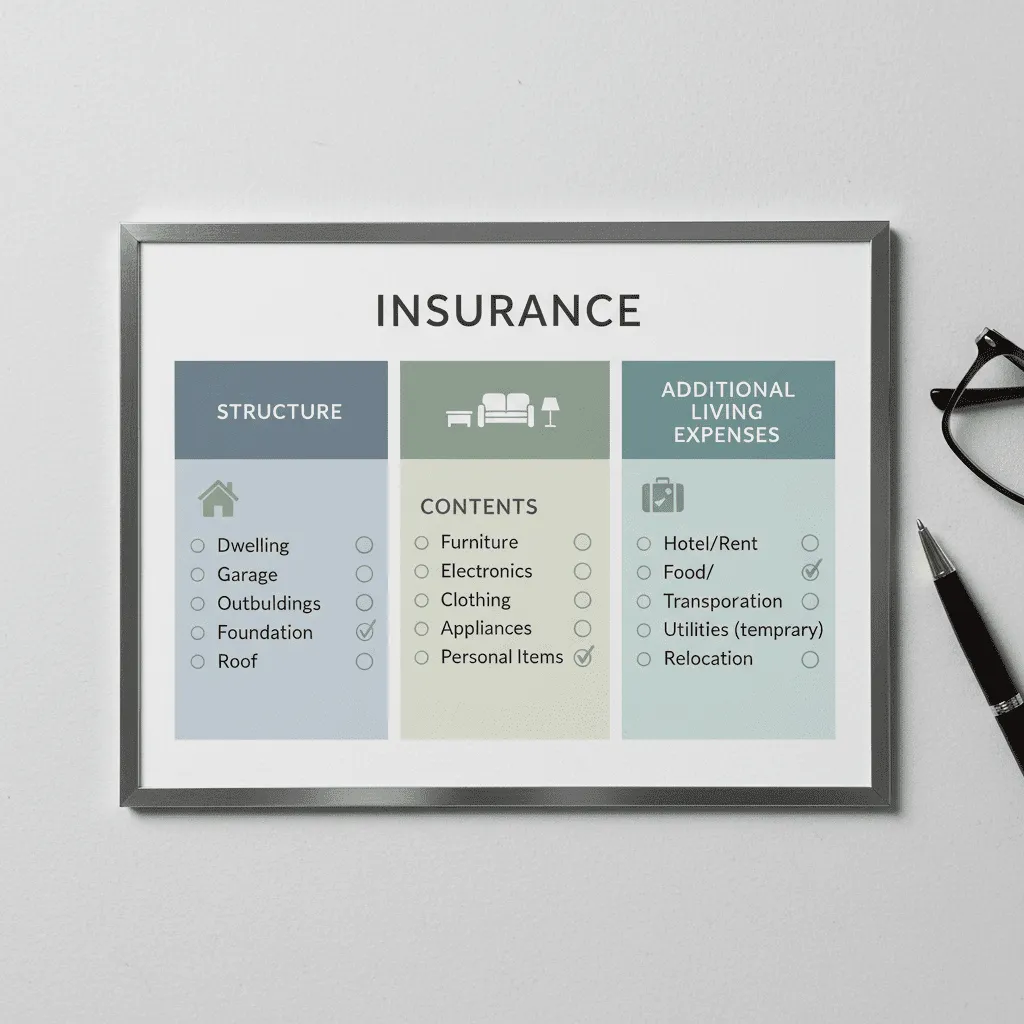
Different losses require different evidence packets. Here is how to handle the big three.
1. Structural Damage
For damage to the building itself, photos aren’t enough. You need Scope Notes. This involves documenting materials, not just holes.
- Flooring: Is it laminate or solid oak? Take a photo of a cross-section if possible.
- Trim/Molding: Measure the height (e.g., 5-inch baseboards vs. standard 3-inch).
- Code Upgrades: If your home is older, you may need “Ordinance or Law” coverage. You need a contractor to document why the current code requires a total upgrade rather than a repair.
2. Personal Property (Contents)
When listing contents, specificity creates value. Do not write “Toaster.” Write “Breville 4-Slice Toaster, Stainless Steel.”
You are likely dealing with Actual Cash Value (ACV) vs. Replacement Cost Value (RCV). The insurer will pay you the depreciated value (ACV) first. To get the full replacement cost (RCV), you usually have to buy the new item and show the receipt. Specificity in your initial list ensures the ACV calculation isn’t low-balled.
3. Additional Living Expenses (ALE)
If you are displaced, keep every receipt. This includes hotel bills, restaurant meals, and even pet boarding.
The “Standard of Living” Rule: ALE covers the difference between your normal expenses and your emergency expenses. If you usually spend $400/month on groceries but now spend $1,000 eating out because you have no kitchen, the claim is for the $600 difference. You must document your normal spending habits (bank statements) to prove this delta.
The “Ghost” Inventory: How to Reconstruct What You Don’t Have Receipts For
What happens if your receipts burned in the fire? This is where forensic accounting comes into play.
Leveraging Loyalty Programs
Stores like Home Depot, Best Buy, and Costco track your purchases via your phone number or membership card. I have successfully helped clients recover thousands of dollars in “proof” simply by asking customer service at these retailers to print a 2-year purchase history. This is Tier 2 evidence that acts like Tier 1.
The “Gift Affidavit” Process
For items received as gifts, you obviously won’t have a receipt. In this case, you can ask the giver to write a brief statement: “I, [Name], gifted [Item] to [Policyholder] on [Date], approximate value $XXX.” It feels awkward to ask, but it works.
Credit Card Year-End Summaries
Most credit card issuers provide a “Year-End Summary” categorizing spend. While it might not show the specific item, showing $5,000 spent at “Rooms To Go” in 2023 strongly supports your claim that you bought a new bedroom set that year.
Common Documentation Mistakes That Cause Denials
Even with great evidence, you can lose a claim due to procedural errors.
Spoilation of Evidence
This is a legal term that essentially means “destroying the evidence.” Triple-I reports that lightning claims alone cost insurers over $1 billion in 2024. If a lightning surge fries your electronics, and you throw the TV in the dumpster before the adjuster sees it, you have committed spoilation.
Sean Kevelighan, CEO of Triple-I, emphasizes that “Fewer claims and a decline in severity indicate increased awareness and improved mitigation.” However, mitigation (like tarping a roof) is different from destruction. Never discard damaged items until the adjuster gives you written permission.
Over-Grouping Items
Adjusters are overworked. If they see a line item “Clothes – $5,000,” they will likely reject it or assign a generic, low value (like Wal-Mart pricing). You must break it down: “5 Men’s Suits (Brooks Brothers) – $500 each.” It takes time, but it increases the payout.
Frequently Asked Questions
What acts as proof of loss if receipts are burned?
If receipts are destroyed, acceptable proof includes credit card statements, bank records, loyalty program purchase histories (Costco/Amazon), photos showing the items in the background, and sworn affidavits from you or friends who can verify the items existed.
How many days do I have to file a proof of loss?
For standard homeowner policies, it is usually 60 days from the time the insurer requests it. For NFIP flood claims, it is strictly 60 days from the date of loss, though FEMA sometimes extends this during major catastrophes. Always check for official extension bulletins.
Do I need original receipts for insurance claims?
Original receipts are the best evidence (Tier 1), but they are not strictly required if you have other strong evidence. Digital records, bank statements, and photos can often substitute for physical receipts, though the process may be slower.
Can insurance deny a claim for bad photos?
Yes. If photos are too blurry, dark, or lack context (close-ups without wide shots), an adjuster may argue they cannot verify the cause or extent of loss. Always use the “4-Corner” technique and ensure EXIF metadata is preserved.
What is the difference between Actual Cash Value and Replacement Cost?
Actual Cash Value (ACV) is what your item is worth today (used). Replacement Cost Value (RCV) is what it costs to buy a new one. Insurers typically pay ACV upfront and release the remaining “recoverable depreciation” only after you prove you have actually replaced the item.
Conclusion: The “Evidence Packet” Checklist
In the high-stakes environment of 2025 insurance claims, data is your currency. The 21% denial rate seen in broader insurance sectors is often avoidable with the right preparation.
Your goal is to make it easy for the adjuster to say “yes.” Hand them a disorganized box of receipts, and you will wait months. Hand them a structured digital folder with a summarized spreadsheet, photos with metadata, and mapped receipts, and you move to the front of the line.
Your Immediate Next Steps:
- Secure the Scene: Mitigate damage (tarp holes) but do not destroy debris.
- Digital Inventory: Walk through your home today and take a video. Open drawers. Narrate what you see.
- Check the Calendar: Identify your “Proof of Loss” deadline immediately.
- Export History: Download your Amazon and credit card year-end reports before you need them.
Documentation feels like a burden when you are grieving a loss, but it is the most profitable work you will ever do. Treat your claim file like a business project, and the payout will follow.