Unlocking Every Insurance Discount You Qualify For
Hidden Savings: The Ultimate Guide to Unlocking Every Insurance Discount You Qualify For (2025 Edition)
Let’s be honest: looking at your insurance renewal notice lately feels less like a routine bill and more like a personal attack on your wallet. If you feel like prices are spiraling out of control, you aren’t imagining it.
According to the latest data from J.D. Power, the average cost of auto insurance in the U.S. rose by a staggering 22.2% year-over-year through March 2024.
In my years of analyzing policy structures, I’ve noticed a recurring pattern. Most drivers aren’t just paying for insurance; they are paying a “laziness tax” for discounts they forgot to claim. We tend to tick the boxes for “Safe Driver” and move on, assuming the carrier is giving us their best price. They aren’t.
You need to adopt a “stacking” strategy. Insurance discounts are rarely mutually exclusive. You can be a defensive driver, a federal employee, and a smart home owner all at once. By the time you finish this guide, you’ll have a roadmap to audit your policy and potentially reclaim hundreds of dollars that belong in your pocket, not your insurer’s ledger.
Table of Contents
The “Big Three” Savings: Where 50% of Your Discount Lives
Before we dig into the niche secrets, we have to look at the foundation. These three categories usually represent the bulk of potential savings. If you aren’t maximizing these, the smaller discounts won’t matter much.
1. The Bundling Math: Why 17% is the Magic Number
You’ve heard the commercials a thousand times: “Bundle and save.” It sounds like marketing fluff, but the actuarial data backs it up. Insurers are desperate for retention. A customer with two policies is statistically far less likely to switch carriers than a customer with one.
According to internal data published by State Farm in 2024, bundling homeowners and auto insurance saves an average of 14% to 17% per household. This isn’t just about convenience; it’s about leverage.
2. Telematics & UBI: The Truth About “Big Brother” Discounts
Here is where things get controversial. Usage-Based Insurance (UBI), or telematics, involves letting your insurer track your driving via a mobile app or a plugin device. They promise massive savings, but is it worth the privacy trade-off?
The J.D. Power 2024 U.S. Auto Insurance Study reveals that adoption is stalling—only 12% to 15% of drivers are enrolled. Why? Because we don’t trust them.
However, if you are a genuinely safe driver, the math is compelling. But there is a catch that most blogs won’t tell you: you can actually raise your rates if you drive poorly.
My advice: If you brake hard, drive late at night (after 11 PM), or commute in heavy stop-and-go traffic, do not enable telematics. The algorithm may penalize you for the “risk” of your environment, even if you are a good driver.
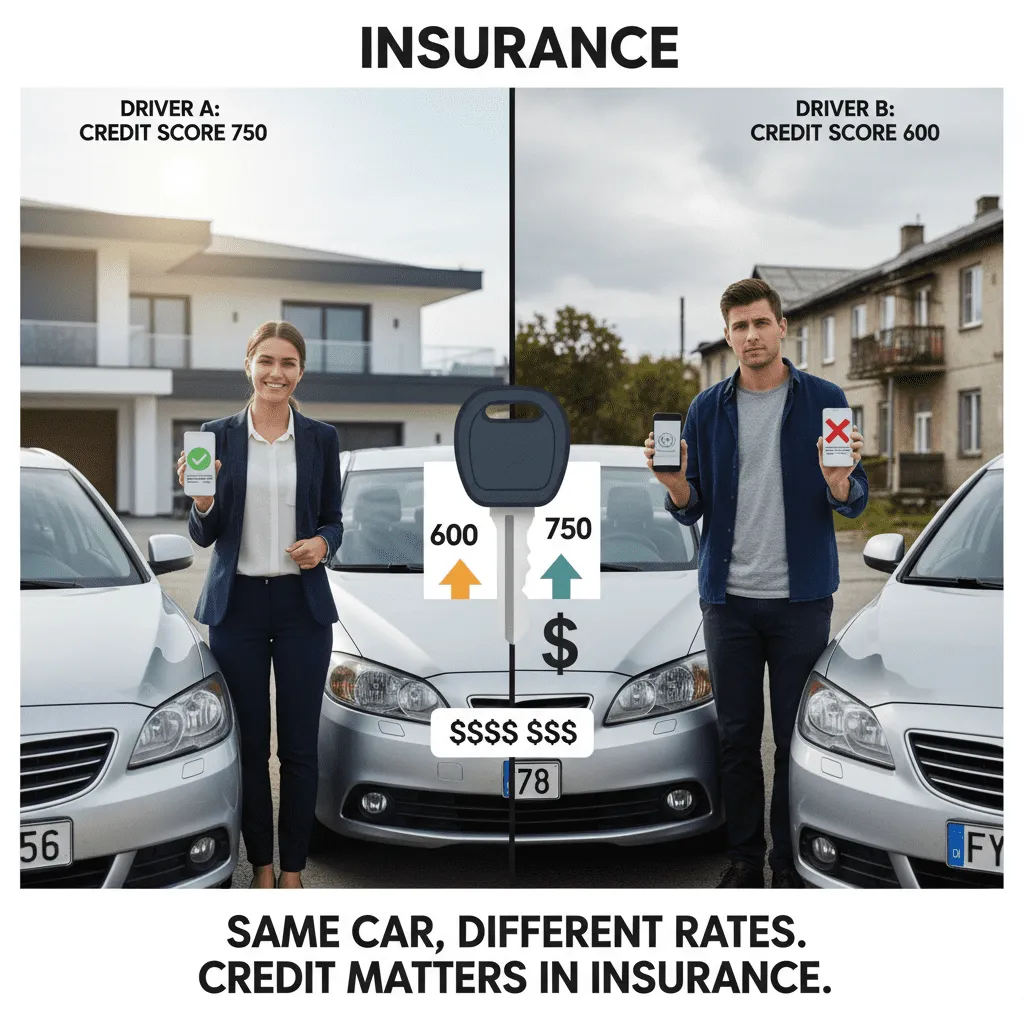
3. The Credit Score Factor: The Invisible Discount
I hate to be the bearer of bad news, but in most states (excluding California, Hawaii, Massachusetts, and Michigan), your credit score is likely impacting your premium more than your driving record.
Data from Insurancenewsnet indicates that drivers with poor credit pay up to 71% more for car insurance than those with excellent credit. Insurers use a “credit-based insurance score” to predict the likelihood of you filing a claim.
If you have recently improved your credit score—perhaps you paid off a credit card or fixed an error on your report—you must call your agent immediately. They will not automatically re-run your score until renewal, and sometimes not even then. You have to ask for a “re-rate based on credit improvement.”
The “Hidden” Occupational & Affinity Discounts
This is the section that usually surprises people. Insurers love data, and the data suggests that certain professions are more cautious than others. If you work in a field that requires precision, analysis, or safety, you might be sitting on a discount.
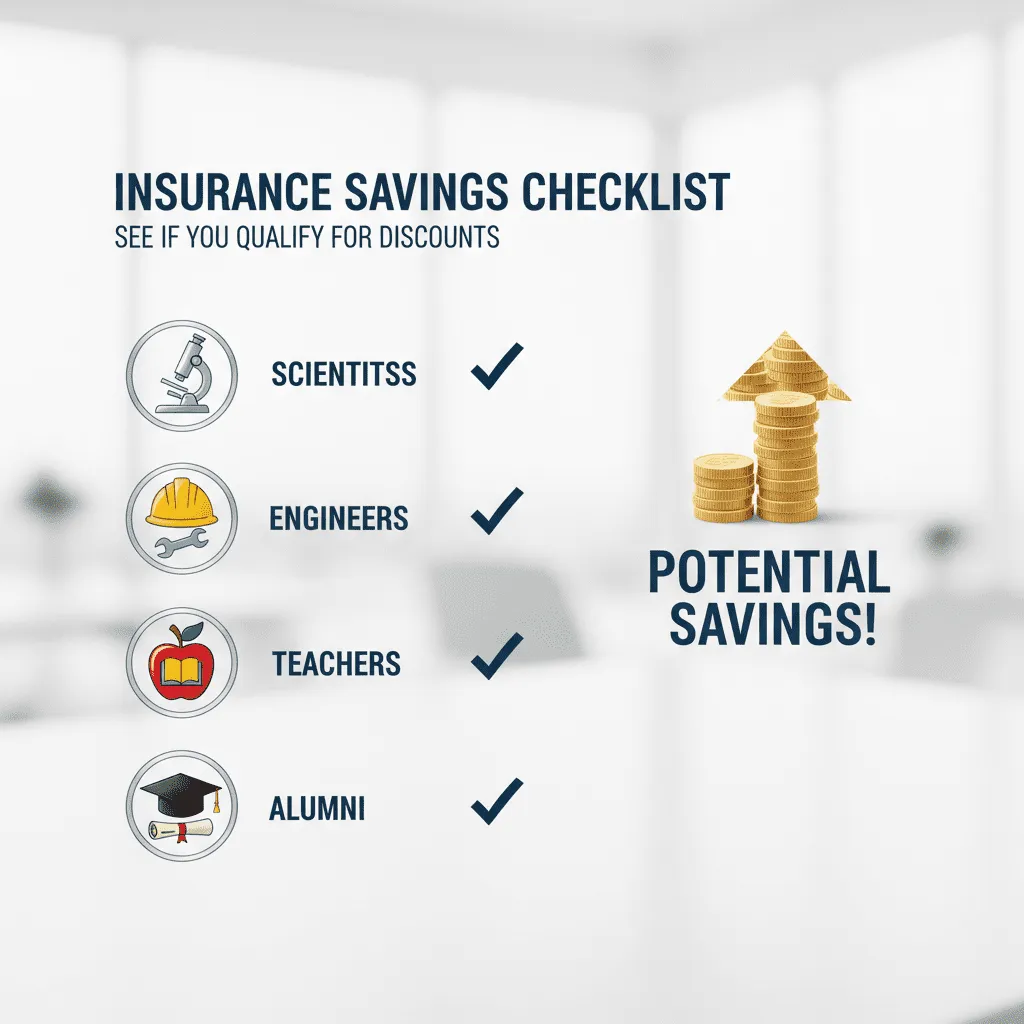
Scientists, Engineers, and Teachers
It sounds like a stereotype, but insurance actuaries have found that engineers and scientists tend to take fewer risks behind the wheel. They drive like they work: carefully and methodically.
According to Insurance.com (2024), carriers like The Personal and Grange offer exclusive rates for these groups. For example, Grange averages $1,046/year for scientists compared to the $1,855 national average. That is nearly an $800 difference just for your job title.
Check your eligibility if you are a:
- Certified Professional Engineer (PE)
- Scientist (B.Sc., M.Sc., Ph.D.)
- Certified Teacher or Professor
- Librarian
Federal & Military Savings (Beyond USAA)
Everyone knows USAA dominates the military space, but they aren’t the only game in town. If you are a federal employee, you have options that are often overlooked.
For instance, Geico offers a specific “Eagle Discount” of up to 12% for active and retired federal employees (GS grades). If you work for the government and haven’t updated your occupation with your insurer, you are overpaying.
The Alumni Network
Did you graduate from a major university? Are you a member of a fraternity or sorority? Many large insurers (Liberty Mutual and Nationwide are famous for this) have partnerships with alumni associations.
I once saw a client save 8% simply by entering their university alumni code. It takes 30 seconds to check, yet most people ignore those “exclusive offer” emails from their alma mater.
State-Specific & Technical Discounts
In some states, discounts aren’t just a perk; they are the law. This is where researching your local regulations pays off.
Defensive Driving Mandates
Most people think defensive driving courses are only for people who got a speeding ticket. Incorrect. In several states, insurers are mandated to offer you a discount if you voluntarily complete a course, regardless of your driving history.
| State | Mandated Discount | Duration | Eligibility |
|---|---|---|---|
| New York | 10% | 3 Years | All Drivers (Mandatory by Law) |
| Delaware | 10-15% | 3 Years | All Drivers |
| Georgia | 10% | 3 Years | Clean record for prev. 3 years |
| Florida | Varies | 3 Years | Drivers 55+ |
Source: National Traffic Safety Institute (NTSI), 2024.
In New York, for example, the NTSI confirms a mandatory 10% discount applied to your liability, PIP, and collision premiums for three years. The course costs about $25 online and takes a few hours. The ROI is incredible.
The “Work From Home” Pivot
The world changed in 2020, but many insurance policies are still stuck in 2019. If you are now working remotely or on a hybrid schedule, your annual mileage has likely plummeted.
Insurers usually tier drivers:
1. High mileage (12k+ miles/year)
2. Average (10k-12k)
3. Low mileage (<7,500)
4. Pleasure use only
If you are still rated as a “commuter” driving 15 miles to work daily, but you actually work from your living room, call your agent. Ask to be re-rated as “pleasure use” or “low mileage.” This alone can drop premiums by 5-10%.
Smart Home & Safety Tech (Homeowners Focus)
Moving over to the homeowners side, technology is reshaping risk. Insurers are terrified of two things: Fire and Water. Mostly water.
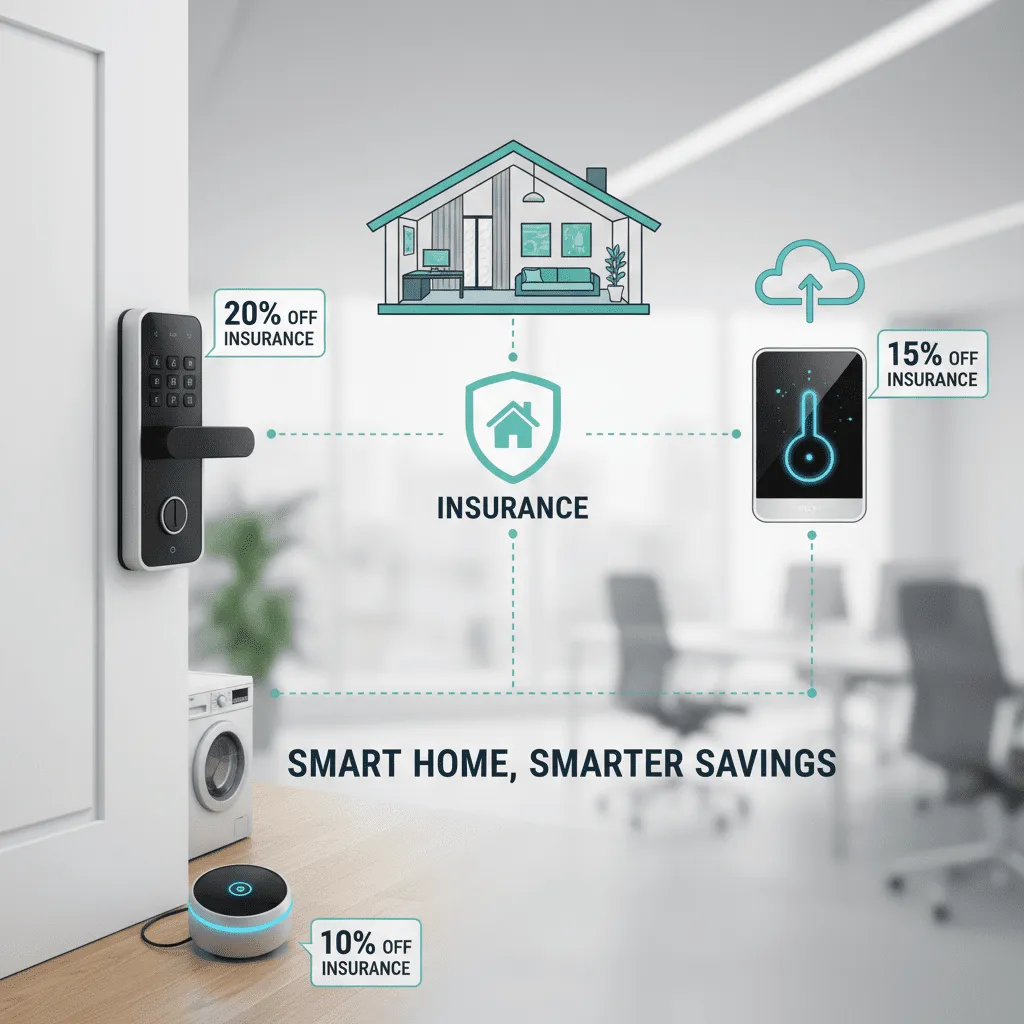
The IoT Discount
Water damage claims are frequent and expensive. As a result, carriers are incentivizing the Internet of Things (IoT). Installing smart leak detectors (like Moen Flo or Phyn) or smart smoke detectors (Nest Protect) can trigger significant price breaks.
A NerdWallet review from February 2024 notes that these devices can yield discounts up to 20% depending on the carrier. Some insurers will even send you the device for free.
However, privacy remains a hurdle. PolicyGenius reports that 65% of Americans are hesitant to install devices that share data. My take? A leak detector doesn’t track your location or behavior; it just tracks water flow. It’s the “safest” smart device to install for a discount without compromising personal privacy.
How to Negotiate Your Rate (The Script)
You’ve gathered the data. You know about the engineer discount, the defensive driving laws, and the telematics trade-offs. Now, you have to get on the phone.
Shopping for insurance has hit an all-time high, with 49% of customers actively looking for new policies in 2024. Insurers know this. They are worried about losing you.
Do not ask: “Can I get a lower rate?”
Do ask: “I’m reviewing my coverage before I consider switching. I’ve noticed my rate increased 22% consistent with the national average, but my risk profile hasn’t changed. Can we review the following discounts to see what I qualify for?”
The 15-Minute Audit Script
You: “Hi, I’m looking at my declarations page. I see I’m rated as a commuter, but I’ve been working from home for two years. Can we adjust my annual mileage to under 7,500?”
You: “Also, I recently completed a defensive driving course / updated my home with smart leak detectors. How do I submit proof for those discounts?”
You: “Lastly, I’m an engineer/teacher/alumni of [University]. Do you have affinity discounts for these groups?”
If they say no to everything? It might be time to walk. J.D. Power data shows that of those who shopped in 2024, 29% actually switched carriers. Loyalty doesn’t pay in the insurance game; leverage does.
Conclusion: The 15-Minute Challenge
We often ignore insurance because it’s complex and boring. But in an economy where inflation is eating into disposable income, a 15-minute audit of your policy is likely the highest hourly wage you will earn this year.
You aren’t just looking for “cheap” insurance; you are looking for accurate insurance. If your policy doesn’t reflect your credit score improvement, your low mileage, your profession, or your safety investments, you are paying for a risk profile that doesn’t exist anymore.
Grab your declaration page, use the script above, and unlock the savings that are already yours.
Frequently Asked Questions
Does checking for car insurance quotes hurt my credit score?
No. When you shop for insurance, carriers perform a “soft pull” on your credit report. This allows them to calculate your insurance score without impacting your FICO score. It is not the same as applying for a credit card or mortgage.
Can I get a discount for a dash cam?
Currently, very few major US insurers offer a direct discount for simply owning a dash cam. However, the footage can be invaluable in proving you were not at fault in an accident, which protects your “Safe Driver” discount and prevents rate hikes.
Is it better to pay monthly or annually?
If you can afford it, always pay in full (annually or every 6 months). Most insurers charge an installment fee for monthly payments, and many offer a “Paid in Full” discount ranging from 5% to 10%.