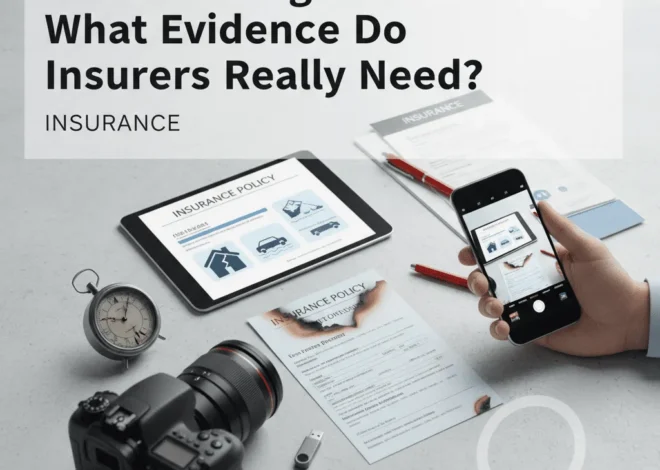
Your Step-by-Step Guide to Filing an Insurance Claim
Oops, An Accident! Your Step-by-Step Guide to Filing an Insurance Claim (And Winning)
That sound. The crunch of metal, the shatter of glass, or the splash of water where it definitely doesn’t belong. Your heart sinks. You know what comes next isn’t just a repair—it’s paperwork.
If you’re reading this, you’re likely in the “panic gap”—that stressful period between the accident and the resolution. You might be wondering: “Will my rates go up?” “Will they actually pay?” or “How long is this going to take?”
Here is the hard truth right out of the gate: It’s taking longer than ever. According to the J.D. Power 2024 U.S. Property Claims Satisfaction Study, the average cycle time for property claims has extended to 23.9 days. That’s nearly a month of waiting, wondering, and stressing.
But delay isn’t the only enemy. In my years analyzing the insurance industry, I’ve seen that the way you handle the first 24 hours often dictates whether you get a full payout or a denial letter. According to a June 2025 analysis of NAIC data by Weiss Ratings, major insurers closed nearly 50% of homeowner claims with zero payment in 2024. That’s a coin toss.
This guide isn’t just about how to file an insurance claim; it’s about how to manage the “business transaction” forced upon you. We’re going to walk through the “Golden Hour” of evidence gathering, the specific scripts to use when you call your agent, and the negotiation tactics usually reserved for public adjusters.

The “Golden Hour”: What to Do Immediately (Before Calling)
Most people instinctively grab their phone to call their agent immediately after an accident. Stop. Take a breath.
Your insurance policy is a legal contract. The moment you dial that number, you are entering a negotiation, whether you realize it or not. Before you make the call (First Notice of Loss, or FNOL), you need to secure your position.
1. Safety & Mitigation (The “Duty to Mitigate” Clause)
This is the most overlooked clause in your policy. Every policyholder has a “duty to mitigate” further damage. If a pipe bursts and you leave the water running while you wait for the adjuster, they can deny the claim for the water damage that occurred after the initial burst.
- Auto: Move the car to a safe shoulder if possible. Turn on hazards.
- Home: Tarp the hole in the roof. Shut off the water main. Board up the broken window.
Do not make permanent repairs, but do whatever is necessary to stop the bleeding. Keep receipts for the tarp, the plywood, or the tow truck. These are reimbursable expenses.
2. The Evidence Gathering Checklist
Your memory will fade. Digital evidence does not. You need to build a “Proof of Loss” package before the insurance company sends their own investigator.
- Photos: Take wide shots to show context and close-ups to show detail. For home claims, photograph the source of the damage (e.g., the pipe) and the resulting damage (the floor).
- Video: Walk through the scene narrating what you see. “It is 2:00 PM, water is entering from the north wall…”
- The “Other” Guy: If this is a car accident, get the other driver’s insurance info, license plate, and—crucially—take a photo of their VIN plate on the dashboard if safe to do so.
3. Review Your “Dec Page” (Declarations Page)
Find your policy documents. Look for the “Declarations Page.” This single sheet tells you your deductible and your policy limits. You need to know these numbers before you talk to the adjuster to avoid setting unrealistic expectations or admitting to things that aren’t covered.

Step-by-Step: How to File Your Claim Without Errors
Once you’ve mitigated the damage and gathered your proof, it’s time to file. This process has changed. It’s less about a friendly chat with a local agent and more about navigating automated systems and call centers.
Step 1: The First Notice of Loss (FNOL)
When you call, you are likely speaking to a customer service representative, not the person who decides your payment. Their job is to type your statement into a computer. That computer often uses algorithms to flag claims for fraud or potential denial.
❌ Don’t Say: “I think I might have looked down for a second and then bam, I hit him.” (Admission of fault).
✅ Do Say: “I was traveling north on Main Street when the collision occurred. The other vehicle struck my passenger side.”
For home claims:
❌ Don’t Say: “My roof is old and it finally started leaking.” (Wear and tear = Denial).
✅ Do Say: “During the storm on [Date], wind created an opening in the roof allowing water intrusion.”
Step 2: The Adjuster Interview (Using the STAR Method)
Within a few days (hopefully), an adjuster will interview you. This is often recorded. To keep your story consistent and clear, borrow a technique from job interviews: The STAR method.
- S – Situation: Set the scene (Time, location, weather).
- T – Task: What were you doing? (Driving to work, sleeping).
- A – Action: What happened? (The tree fell, the car swerved).
- R – Result: The damage caused.
Sticking to this structure prevents you from rambling, which is where many people accidentally contradict themselves.
Step 3: The Independent Inspection
The insurance company will send an adjuster to look at the damage. Note that this person might be an “Independent Adjuster” (IA). They are contractors paid by the insurance company to assess the loss. While they may seem friendly, their paycheck depends on the insurance company being happy with their reports.
Your Goal: Be present. Walk with them. If they miss a damaged area, point it out politely. “Did you note the water stain in the corner here as well?”
Understanding the Money: ACV vs. RCV
This is where the math gets painful. You need to understand the difference between Actual Cash Value (ACV) and Replacement Cost Value (RCV). Most bad reviews for insurance companies stem from a misunderstanding of these two acronyms.
The Depreciation Trap
If your 10-year-old TV is destroyed, the insurance company does not owe you a brand new 4K TV immediately. They owe you what a 10-year-old TV is worth today (craigslist value). This is ACV.
However, if you have an RCV policy (common for homeowners), you can get the full value, but usually in two steps:
- Check 1 (ACV): The value of the item minus depreciation. You get this quickly.
- Check 2 (Recoverable Depreciation): Once you actually buy the new TV or fix the roof and submit the receipt, they release the “holdback” money.
Life Insurance Premium Estimator
Your Estimated Monthly Premium:
$0.00
(This is an estimate for illustrative purposes only and not a real quote.)
Simple Depreciation Estimator
Use this tool to estimate your immediate ACV payout for a total loss item.
When They Say "No": Handling Denials & Lowballs
It happens. You get a letter saying "Claim Denied" or a check that barely covers half the repair cost. Don't panic. This is often just the opening offer.
The "Reservation of Rights" Letter Explained
You might receive a scary-sounding letter called a "Reservation of Rights." This essentially means, "We are investigating, but we reserve the right to deny you later if we find out this isn't covered." It is standard procedure. It does not mean you have been denied yet, but it does mean you need to be very careful about your documentation.
Negotiating a Total Loss (The "Comparable Vehicle" Strategy)
If your car is totaled, the adjuster will offer you a settlement based on their valuation report. Often, this report uses comps from 100 miles away or vehicles in worse condition than yours.
The Counter-Move: Find 3 "For Sale" listings of your exact car (same year, trim, similar miles) in your local area. If they are selling for $15,000 and the insurer offered $12,000, send the ads to the adjuster. Say, "I cannot accept your offer as it does not reflect the prevailing market rates in my zip code. Here is the data supporting my counter-demand."
When to Hire a Public Adjuster
If you are dealing with a large home claim (fire, extensive water damage) and feel overwhelmed, consider a Public Adjuster. Unlike the "Independent Adjuster" who works for the insurer, a Public Adjuster works for you. They take a percentage of the settlement (usually 10-20%).

2024-2025 Industry Trends You Must Know
The insurance game is evolving rapidly. Here are two major trends impacting your claim right now.
The Rise of AI Adjusters
Many insurers, including industry giants, are now using AI to estimate damages from photos you upload. While fast, AI often misses subtle damage. According to the J.D. Power 2024 Digital Experience Study, satisfaction drops 176 points if the digital process takes longer than expected or feels inaccurate. If the AI estimate looks low, demand a human inspection.
Climate Risk & "Wear and Tear" Denials
Insurers are bleeding money due to climate disasters. As a result, they are tightening standards. We are seeing a massive uptick in claims being denied as "wear and tear" rather than "storm damage." According to Dr. Martin D. Weiss, founder of Weiss Ratings, insurers are using denials as a strategy to "cut back on claims payments amidst climate economic headwinds." This means if your roof was old before the storm, you need strong proof (like prior inspection reports) to prove the storm caused the specific damage you are claiming.
FAQ: Your Burning Questions Answered
Is there a time limit to file an insurance claim?
Yes. This varies by state and policy, but most policies require you to report the loss "promptly" or "as soon as practicable." Generally, you should file within 30 days, but legally you may have up to 1-2 years depending on your state's statute of limitations.
Do I pay a deductible if I am not at fault?
Usually, yes. You pay your deductible to get your car fixed through your own insurance (collision coverage). Your insurance company will then attempt to recover the money from the at-fault driver's insurance (subrogation). If they succeed, they will reimburse your deductible.
Why is my insurance check made out to me and my mortgage company?
Because your mortgage lender has a financial interest in the property. They want to ensure the money is actually used to repair the home, protecting their collateral. You will typically need to endorse the check and send it to your mortgage company, who will