What Each Type of Insurance Actually Protects?
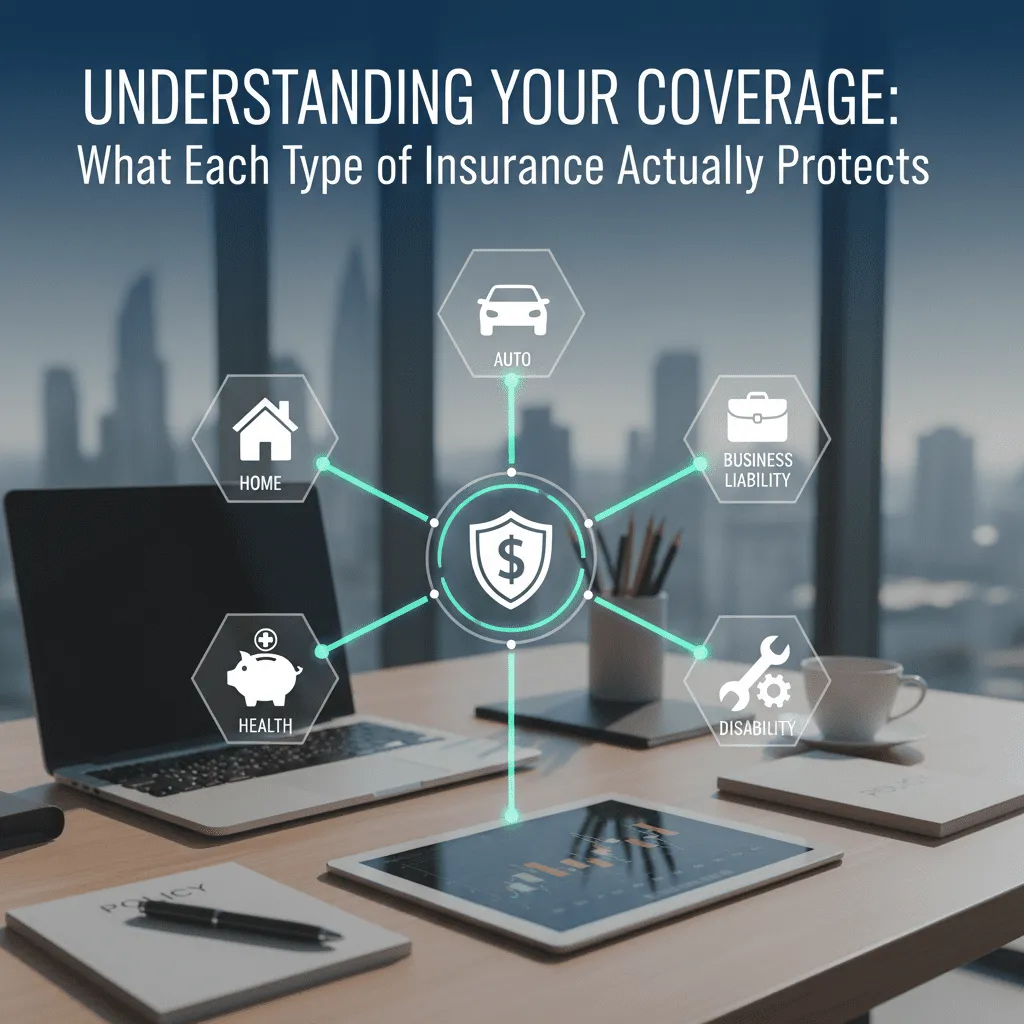
Understanding Your Coverage: What Each Type of Insurance Actually Protects (2025 Guide)
It was a Tuesday morning when I sat across from a couple who had just lost their home to a storm. They pushed a policy document across the desk, confident that the word “Comprehensive” meant they were safe. I had to deliver the news: their policy covered wind, but the water that surged in afterward—classified as floodwater—was a specific exclusion.
They aren’t alone. In 2024, the global insurance protection gap for natural catastrophes stood at a staggering 60%, leaving $223 billion in damages uninsured, according to WTW and Aon’s Natural Catastrophe Review. You might be paying premiums every month for peace of mind, but are you actually paying for protection?
The insurance landscape has shifted violently in the last 18 months. Inflation has rendered old coverage limits obsolete, and new exclusions are appearing in the fine print. In this guide, we are going to decode the complex “legalese” of the five major insurance types. My goal is to move you from being a policy buyer to a coverage owner.
The Core Concept: The “Protection Gap” Reality
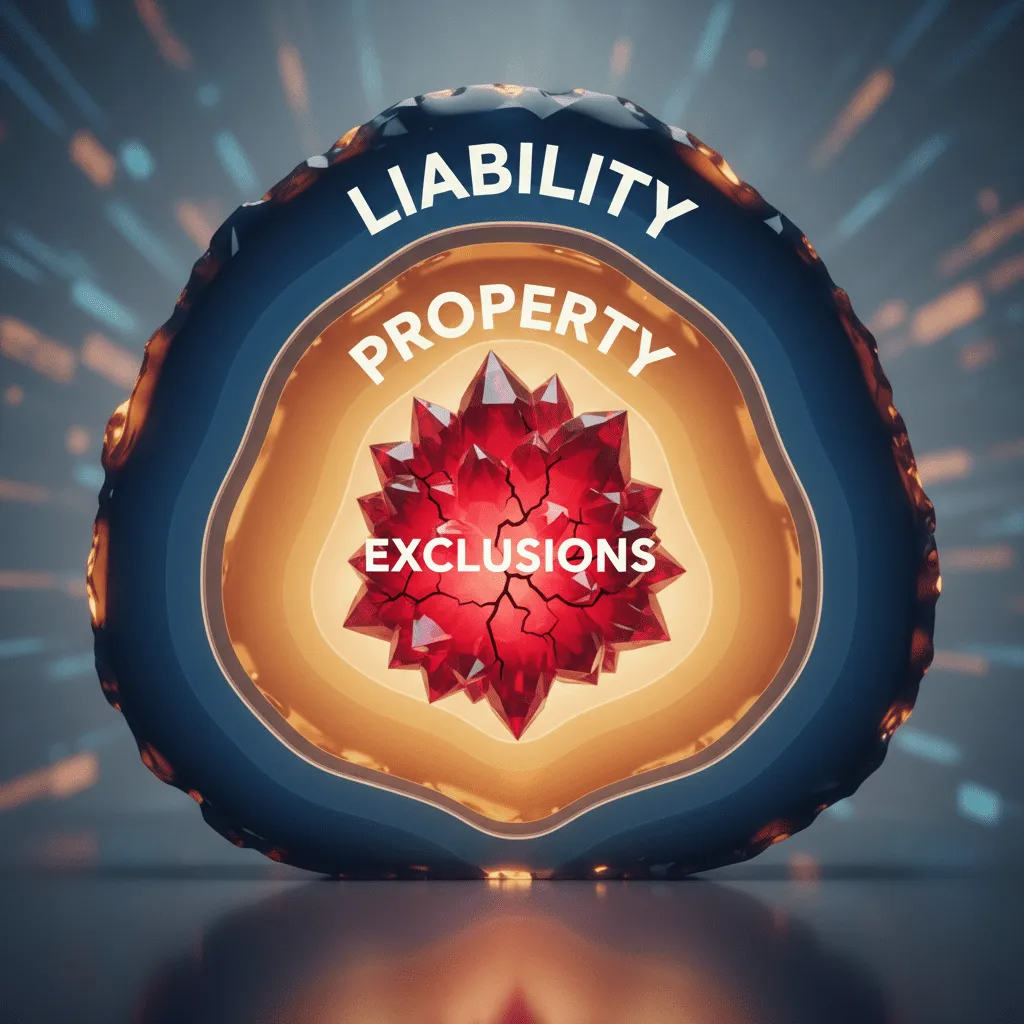
Before we dive into specific policies, we need to address the elephant in the room: The Protection Gap. In simple terms, this is the difference between the total economic loss you suffer and the amount your insurance actually pays out.
Many people view insurance as a savings account—you put money in, and you get money out when things go wrong. That is a dangerous misconception. Insurance is risk transfer. You are paying a company to take on specific risks, but they are very precise about which risks they accept.
According to Swiss Re Institute’s Sigma Report 3/2024, global economic resilience is being tested. While the economy grew by 2.7% in 2024, the gap between insured losses and total losses remains massive. If your house burns down (insured loss) and costs $500,000 to rebuild, but your policy limit is $350,000 because you haven’t updated it for inflation, you have a personal protection gap of $150,000.
Auto Insurance: Beyond the “Full Coverage” Myth
If you ask most drivers what they have, they’ll say “Full Coverage.” Here is the thing: “Full Coverage” is not a specific policy term. It is a marketing phrase that usually implies a combination of Liability, Collision, and Comprehensive coverage. But it rarely means “everything is covered.”
The 2025 Rate Hike Reality
You may have noticed your bill jumping recently, even with a clean driving record. You aren’t imagining it. According to the J.D. Power 2024 U.S. Auto Insurance Study, auto insurance rates increased 11.2% on average in 2024. This massive spike has caused a significant drop in customer trust.
Why the increase? Breanne Armstrong, Director of Global Insurance Intelligence at J.D. Power, explains: “Auto insurers are in a tough position right now. With repair costs still rising… insurers are still losing money, despite passing along huge price increases to their customers.” Modern cars with sensors and cameras are simply more expensive to fix than the bumpers of ten years ago.
Deconstructing the Declarations Page
To understand your auto coverage, you need to look at the numbers on your “Dec Page.” They usually look like this: 100/300/100.
- Bodily Injury Liability ($100k/$300k): Pays for the other person’s medical bills if you cause a crash. The first number is per person; the second is per accident.
- Property Damage Liability ($100k): Pays to fix the other person’s car or property.
The Gap Trap: If you total a brand new car, your insurance pays the “Actual Cash Value” (ACV)—what the car is worth used the second before the crash. In late 2024, used car prices fluctuated wildly. Without “Gap Insurance” or “New Car Replacement” riders, you could owe the bank thousands more than the insurance payout.
| Coverage Type | Perception (“I’m covered for…”) | Reality (What is actually protected) |
|---|---|---|
| Comprehensive | “Everything that happens to my car.” | Only non-collision events: Theft, fire, hail, and hitting an animal. Does NOT cover engine failure or wear and tear. |
| Collision | “Any accident, no matter what.” | Damage to your car when you hit another object. Subject to a deductible (e.g., you pay the first $1,000). |
| Uninsured Motorist | “Unnecessary extra cost.” | Critical Protection. Covers you if you are hit by a driver with no insurance (roughly 1 in 8 drivers). |

Homeowners & Renters: The “Perils” You Don’t See
Your home is likely your biggest asset, yet this is where the most dangerous coverage gaps exist in 2025. The biggest culprit? Inflation.
Replacement Cost vs. Actual Cash Value
This is the single most important definition in your policy.
Actual Cash Value (ACV) pays what your roof is worth today (20-year-old shingles = low payout).
Replacement Cost pays what it costs to buy materials and labor today to fix it.
With inflation driving up construction costs, ACV policies can be financial suicide. Always aim for “Guaranteed Replacement Cost” if available.
The “Water” Distinction
Homeowners often assume “water damage” is a single category. Insurers break it down into three distinct tiers, and standard policies usually only cover one:
- Burst Pipe (Sudden & Accidental): Usually Covered.
- Sewer/Drain Backup: Usually Excluded (Requires a rider/endorsement).
- Flood (Rising Water): Always Excluded from standard policies.
We saw this play out tragically with Hurricane Helene and Milton in 2024. As noted in the Aon 2024 Climate and Catastrophe Insight report, secondary perils like severe convective storms caused 41% of global insured losses. Many homeowners discovered too late that their policies covered wind (the storm) but not the flood (the surge).
Health Insurance: Decoding the Alphabet Soup
Navigating health insurance often feels like learning a second language. In 2024, the financial stakes of not understanding these terms increased dramatically.
According to the KFF 2024 Employer Health Benefits Survey, the average annual deductible for single coverage reached $1,787, with 32% of workers facing a deductible of $2,000 or more. This means for many, insurance doesn’t even kick in until they’ve spent thousands.
Key Terms to Master
- Deductible: What you pay before insurance pays a dime (except for preventative care).
- Co-insurance: After the deductible, you split the bill (e.g., 80/20). You pay 20%.
- Out-of-Pocket Maximum: The safety net. Once you hit this number in a year (including deductibles and co-pays), the insurer pays 100%.
Drew Altman, President & CEO at KFF, puts the cost in perspective: “Employers are shelling out the equivalent of buying an economy car for every worker every year to pay for family coverage.” With costs this high, verifying your “Network Adequacy” is vital to avoid surprise bills from out-of-network specialists.

Life & Disability: Protecting Your Income
This is the most selfless insurance, and ironically, the most neglected. It isn’t about protecting things; it’s about protecting the future of the people you love.
The “Need-Gap” Crisis
There is a massive discrepancy between what people think they need and what they have. The 2024 Insurance Barometer Study by LIMRA reveals that 42% of Americans say they need more life insurance. This represents a “need-gap” of roughly 102 million adults.
Why the gap? Perceived cost. Most people estimate life insurance costs 3x more than it actually does. For a healthy 30-year-old, a term policy can cost less than a streaming subscription.
Disability: The Forgotten Safety Net
If you have a machine in your basement that prints your annual salary legally, would you insure it? That machine is you. Yet, LIMRA data shows less than 1 in 5 consumers (18%) have disability insurance. This is terrifying when you consider that 1 in 4 20-year-olds will become disabled before reaching retirement age.
Interactive Life Insurance Calculator
Use this simple tool to estimate your coverage gap based on the “DIME” method (Debt, Income, Mortgage, Education).
*This is a basic estimation assuming 10x income replacement + liabilities. Consult a financial advisor for precise figures.
How to Perform an “Insurance Audit” in 15 Minutes
You don’t need to be an actuary to protect yourself. Set aside 15 minutes this weekend, grab your Declarations Pages, and ask these five questions:
- The Inflation Test: Does my home insurance coverage limit match current local construction costs per square foot?
- The Rental Check: Does my auto policy pay for a rental car if mine is in the shop for 3 weeks? (Look for “Loss of Use”).
- The Deductible Stress Test: If a storm hits tomorrow, do I have $2,000 (or my wind deductible) in my bank account right now?
- The Liability Shield: Is my liability limit lower than my net worth? (If yes, you are a target for lawsuits. Consider an Umbrella Policy).
- The Beneficiary Review: Are the beneficiaries on my life insurance still accurate? (Ex-spouses receiving payouts happens more often than you think).
Frequently Asked Questions
What are the 4 main types of insurance?
The four pillars of personal finance protection are Life, Health, Auto, and Long-Term Disability insurance. While Homeowners/Renters is critical, these four protect your body and your ability to generate income.
Does home insurance cover flood damage in 2025?
Generally, no. Standard homeowners policies explicitly exclude flood damage caused by rising water (from outside). You must purchase a separate policy through the NFIP (National Flood Insurance Program) or a private insurer.
Why did my auto insurance rate go up with a clean record?
Rates are determined by more than just your driving. Inflation in parts, labor shortages, increased litigation costs, and higher accident severity in your zip code all contribute to rate hikes. As noted by J.D. Power, the entire industry has raised rates to combat these losses.
Is umbrella insurance worth it for the middle class?
Absolutely. Umbrella insurance provides liability coverage above your auto and home limits. In a litigious society, a $500,000 lawsuit could wipe out your savings and garnish future wages. A $1 million umbrella policy often costs less than $300 a year.
Conclusion: From Buying a Policy to Ensuring Coverage
Insurance is not a product you buy and forget; it is a contract you must manage. The data from 2024 and 2025 paints a clear picture: costs are rising, risks are evolving, and the protection gap is widening for those who aren’t paying attention.
When you look at your policy today, don’t just look for the premium—the amount you pay. Look at the exclusions—the amount you might lose. Whether it’s the 60% global gap in disaster coverage or the millions of families underinsured for life events, the statistics are warnings, not just numbers.
Take the time to audit your coverage. Call your agent. Ask the hard questions about “Replacement Cost” and “Water Backup.” The best insurance policy isn’t the cheapest one; it’s the one that actually pays when your world turns upside down.