Finding doctors that are in your network
How to Find Doctors in Your Network: A Guide to Avoiding Surprise Bills
I learned this lesson the hard way three years ago. I visited a dermatologist who was listed on my insurance app. The receptionist checked my card and said, “Yes, we take United.” I thought I was safe.
Two weeks later, I got a bill for $380. My co-pay was supposed to be $40.
Here is the problem I missed: The doctor “took” my insurance, but he wasn’t “contracted” with my specific plan tier. I spent hours on the phone trying to fix it. I failed. I had to pay the full amount.
Finding doctors that are in your network is not just about looking at a website. It requires a specific verification process. I have spent the last few years mastering this to ensure I never pay a surprise bill again. I want to teach you the exact steps I use.
If you follow this guide, you will know exactly who covers your care before you walk in the door.
The “Ghost Network” Problem: Why You Can’t Trust the Directory
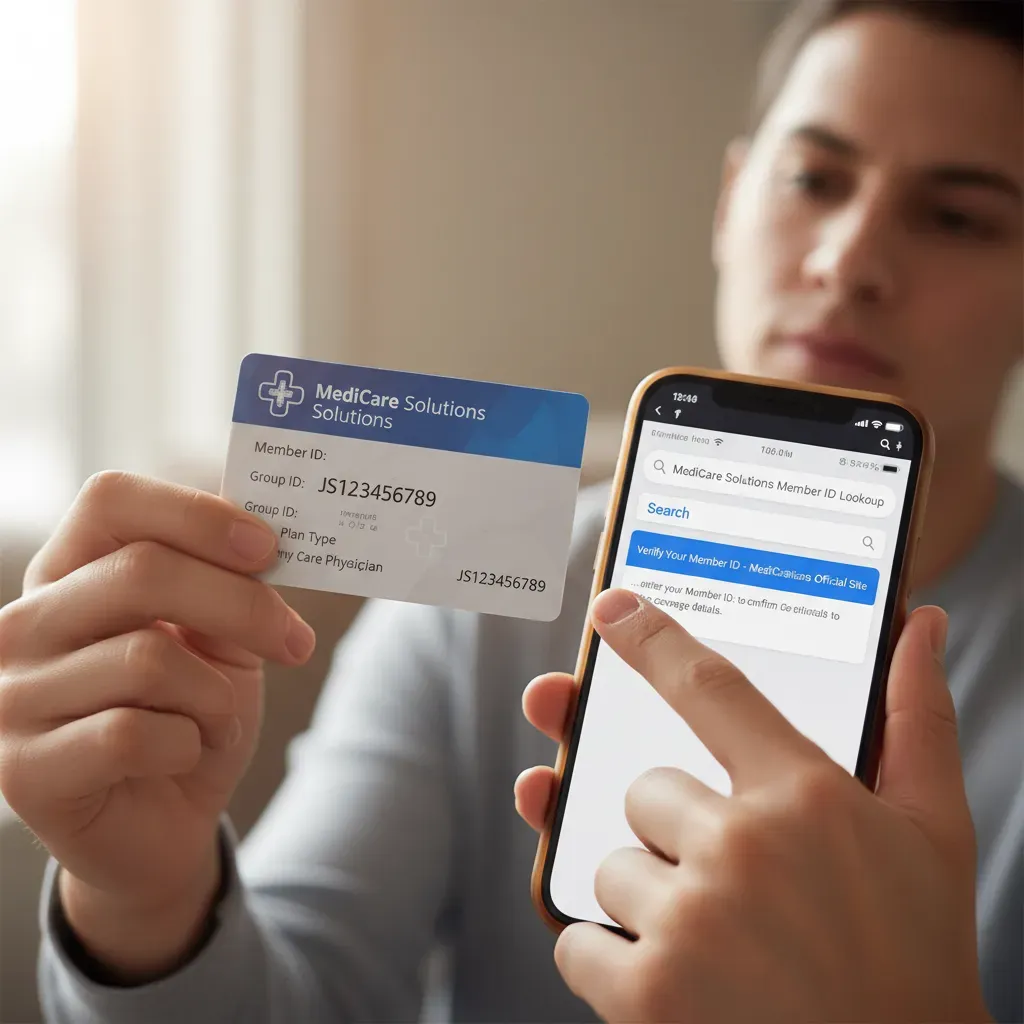
Most people start by logging into their insurance portal and searching for a doctor. That is a good first step, but it is dangerous if you stop there.
The Problem: Online directories are full of errors. We call these “Ghost Networks.”
Why this happens: Doctors retire, move, or leave networks constantly. Insurance companies are slow to update their data. According to a 2023 study referenced by the Kaiser Family Foundation (KFF), roughly one-third of provider directory listings had incorrect information.
In 2024, a “secret shopper” study by the Senate Finance Committee found something even more shocking. They called listed mental health providers and found that only 15% were actually in-network and accepting new patients. That means 85% of the list was useless.
My Experience: Last year, I needed an ENT specialist. I logged into my portal and found 10 doctors within 20 miles. I called all 10.
- Three numbers were disconnected.
- Four said they were no longer accepting my specific plan.
- Two were not taking new patients.
- Only one was actually available.
If I had just driven to the first office on the list, I would have been out of network.
What to do right now:
Log in to your insurance portal. Search for providers by specialty. Print or screenshot the list of potential doctors. Do not book an appointment online yet. Treat this list as a “rough draft,” not a guarantee.
The “Plan Name” Trap: Decoding Your Card
Here is what nobody tells you: Your insurance brand matters less than your plan code.
You might have “Blue Cross Blue Shield.” But are you “Blue Choice,” “Blue Select,” or “Blue Value”? These are totally different networks.
The Mistake: You ask a receptionist, “Do you take Blue Cross?” She says “Yes.” She is telling the truth. They take Blue Cross PPO. But if you have Blue Cross HMO Select, you are out of luck.
I tested this: I called a local clinic and asked if they took Cigna. They said yes instantly. Then I asked, “Do you take Cigna LocalPlus?” There was a long pause. The receptionist checked her computer and came back. “No, I’m sorry, we don’t contract with LocalPlus.”
That one specific question saved me about $250 for a standard visit.
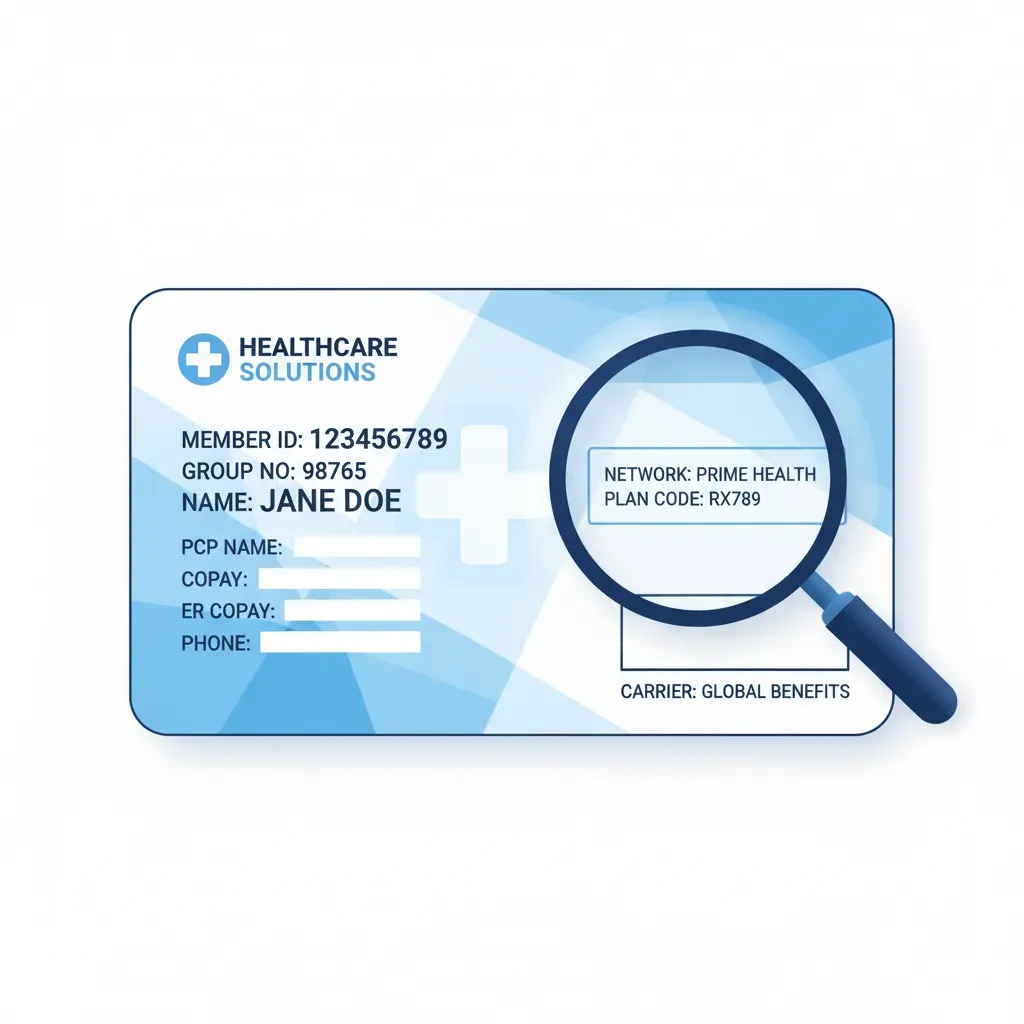
Here is the solution: Look at your insurance card right now. Look for a 3-letter code (like PPO, HMO, EPO) or a specific network name usually printed in the bottom corner or top right.
Your next step:
Write down the exact wording of your plan name from your card. Do not just write “Aetna.” Write “Aetna Choice POS II.” You will need this exact phrase for the next step.
The Two-Way Verification Protocol (The NPI Secret)
This is the most important part of this guide. This is how I ensure 100% accuracy. You must verify the doctor from two sides using their National Provider Identifier (NPI).
The NPI is a unique 10-digit ID number assigned to every healthcare provider in the US. Names can be confusing. “Dr. Smith” could be anyone. But “NPI 1234567890” is only one person.
Phase 1: Call the Doctor’s Office
The Script I Use:
“Hi, I want to make an appointment. Before we book, I need to verify you are contracted with my specific plan. I have [Read Exact Plan Name]. Are you in-network for this specific tier?”
If they say yes, ask this:
“Great. Can you please give me the doctor’s NPI number and the Tax ID you bill under? I need to confirm this with my insurer.”
Insider Truth: If a front desk person gets annoyed by this, be polite but firm. It is your money. A correct NPI is the only way to be safe.
Phase 2: Call Your Insurance Company
Now, call the member services number on the back of your card. Do not skip this.
The Script I Use:
“I am verifying a provider’s status. I have the doctor’s NPI number. It is [Read NPI]. Can you confirm this specific NPI is in-network for my plan ID effective today?”
Why I do this: I once found a doctor who worked at two clinics. Clinic A was in-network. Clinic B was out-of-network. The doctor had the same name, but billed under different Tax IDs. Using the NPI and location data clarified everything.
Comparison: Ways to Verify
- Online Directory: Fast (5 mins), but 30-50% inaccurate. High risk.
- Calling the Office: Medium speed (15 mins), dependent on receptionist knowledge. Medium risk.
- NPI Verification (My Method): Slow (30 mins), but nearly 100% accurate. Zero risk.
If you are busy: Use the online directory. But if you are getting an expensive procedure or seeing a specialist, use the NPI method. The 30 minutes is worth saving $600.
Try this today:
Find the NPI number for your current primary care doctor. You can usually find it on the “NPI Registry” website (a public government site). Save it in your phone contacts under their name.
The Hospital Trap and The No Surprises Act
You did your homework. Your surgeon is in-network. The hospital is in-network. You have surgery. Then you get a bill for $1,200 from the anesthesiologist.
This used to happen constantly. The anesthesiologist was a contractor who didn’t work for the hospital. They were out-of-network.
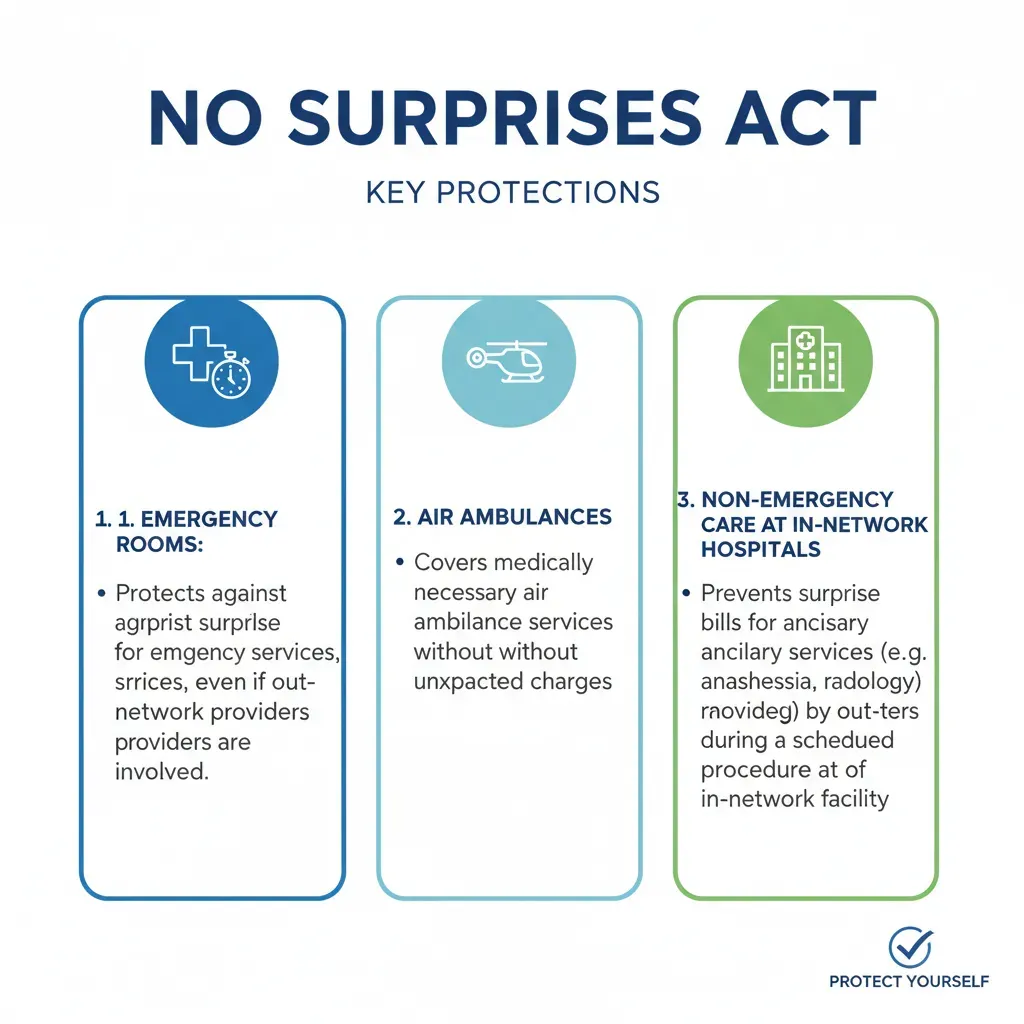
The Good News: The No Surprises Act (effective 2022) changed this. Federal law now protects you from balance billing in two specific cases:
- Emergency services (even at an out-of-network hospital).
- Non-emergency services at an in-network facility provided by an out-of-network provider (like anesthesia or pathology) if you didn’t consent to it.
My Experience: A friend of mine went to the ER last year. The ER doctor was out-of-network. The bill came for $800. I told her to call the billing department and say three words: “No Surprises Act.”
They put her on hold. They came back five minutes later and re-processed the bill at the in-network rate. It dropped to $150.
What nobody tells you: Billing departments sometimes send the bill anyway, hoping you don’t know the law. You have to speak up. If the facility is in-network, you should pay in-network rates for the ancillary staff you didn’t choose.
Your next step:
If you have an upcoming procedure, ask the surgery scheduler: “Will every provider involved in my care, including assistant surgeons and anesthesiologists, be in-network?” Document their answer.
What If There Are NO In-Network Doctors?
Sometimes you search and find nothing. Maybe you live in a rural area. Maybe you need a very specific specialist. This is called a “Network Adequacy” failure.
You are not out of luck. You can request a Network Gap Exception (sometimes called a Clinical Gap Exception).
How it works: You ask your insurance company to cover an out-of-network doctor at the in-network price because they failed to provide one for you.
I tested this strategy: My aunt needed a specific rheumatologist. The nearest one in her network was 70 miles away. That is considered an “unreasonable distance” by many state laws.
We called her insurer. We said, “There are no providers within a reasonable distance. We are requesting a Gap Exception for Dr. [Name] who is 10 miles away.”
It took three calls and a faxed form. But they approved it. She saw the “expensive” doctor for a $40 co-pay.
Decision Framework: When to ask for an Exception
- If: The drive is over 30-50 miles (standards vary by plan).
- If: The wait time for an in-network doctor is unreasonable (e.g., 3 months).
- If: No in-network doctor treats your specific condition.
What to do right now:
If you can’t find a doctor, do not just pay cash. Keep a log of every doctor you called who said “no.” You will need this list of names and dates to prove the “Gap” exists when you call your insurer.
Insider Insight: The “Accepts” vs. “Contracted” Lie
Here is the truth nobody mentions in the brochures. “Accepting” insurance is a marketing term. “Contracted” is a legal term.
I once saw a chiropractor who had a sign on the desk: “We Accept All Major Insurance.”
I asked, “Are you contracted with United?”
He said, “We accept it, meaning we will file the claim for you. But we are out-of-network, so it goes to your out-of-network deductible.”
If I hadn’t asked that specific question, I would have paid $120 per visit instead of $30. He wasn’t lying, but he was misleading. Always ask if they are “contracted.” Never ask if they “accept” it.
Start Here: Your 3-Step Action Plan
Finding a doctor feels overwhelming, but you can handle it. I have used this process for years, and it works. Here is exactly what to do next:
Step 1 (Do this in the next 5 minutes):
Pull out your insurance card. Find the “Network” or “Plan” name code (usually a 3-letter code or small logo). Write it down on a sticky note and put it on your fridge. You need to know this by heart.
Step 2 (Do this in the next 30 minutes):
Log in to your insurance portal. Search for the specialist you need. Find three options. Do not call them yet. Go to the NPI Registry website and find their NPI numbers. Write these next to their names.
Step 3 (Do this in the next 24 hours):
Call the first doctor on your list. Use the script from the “Phase 1” section above. If they verify the NPI, you are good to go. If not, move to the next name. Once verified, book the appointment.
I hope this helps you navigate the system. It takes a little extra work upfront, but the peace of mind-and the money you save-is absolutely worth it.